
My ex-wife’s interpretation of  is that everything equals master card…. squared, mine is Eventually money ceases, unfortunately, squared.
Dedicated to my son who knows the woman of which I speak, thanks for the idea and motivation kiddo.
My ex-wife’s interpretation of is that everything equals master card…. squared, mine is Eventually money ceases, unfortunately, squared.
Dedicated to my son who knows the woman of which I speak, thanks for the idea and motivation kiddo.

We the undersigned, by virtue of listing an e-mail and name, are signing a petition that requests that the United States Congress make it a law that all companies that do business in the United States list on their website where all there manufacturing factories are located as well as how much the employees, by job title, make in earned income and what is the age of the youngest worker and that it certifies that there is no child slavery. That the list will be clearly put on the website and be listed as Factory Locations and Earned Income by Country. This petition is to make clear what companies do business where and how much they pay their employees and what percentage of their manufacturing is located in what country. This petition is meant to identify businesses that use slave wages and sweat shops. That’s not allowed in this country and should not be allowed anywhere. This would help make the competition for manufacturing jobs fair globally and end all child slavery. Here’s the catch, I need at least 100,000 signatures so you need to pass it on, and on, and on. Let us, the people, force Congress to do something about it.
Looking Good: The Psychology and Biology of Beauty
Charles Feng
Human Biology, Stanford University
feng@jyi.org
In ancient Greece, Helen of Troy, the instigator of the Trojan War, was the paragon of beauty, exuding a physical
 |
| Model Cindy Crawford, an example of symmetry Image courtesy ofwww.cindy.com |
brilliance that would put Cindy Crawford to shame. Indeed, she was the toast of Athens, celebrated not for her kindness or her intellect, but for her physical perfection. But why did the Greek men find Helen, and other beautiful women, so intoxicating?
In an attempt to answer this question, the philosophers of the day devoted a great deal of time to this conundrum. Plato wrote of so-called “golden proportions,” in which, amongst other things, the width of an ideal face would be two-thirds its length, while a nose would be no longer than the distance between the eyes. Plato’s golden proportions, however, haven’t quite held up to the rigors of modern psychological and biological research — though there is credence in the ancient Greeks’ attempts to determine a fundamental symmetry that humans find attractive.
Symmetry is attractive to the human eye
Today, this symmetry has been scientifically proven to be inherently attractive to the human eye. It has been defined not with proportions, but rather with similarity between the left and right sides of the face Thus, the Greeks were only partially correct.
By applying the stringent conditions of the scientific method, researchers now believe symmetry is the answer the Greeks were looking for.
|
By applying the stringent conditions of the scientific method, researchers now believe symmetry is the answer the Greeks |
Babies spend more time staring at pictures of symmetric individuals than they do at photos of asymmetric ones. Moreover, when several faces are averaged to create a composite — thus covering up the asymmetries that any one individual may have — a panel of judges deemed the composite more attractive than the individual pictures.
Victor Johnston of New Mexico State University, for example, utilizes a program called FacePrints, which shows viewers facial images of variable attractiveness. The viewers then rate the pictures on a beauty scale from one to nine. In what is akin to digital Darwinism, the pictures with the best ratings are merged together, while the less attractive photos are weeded out. Each trial ends when a viewer deems the composite a 10. All the perfect 10s are super-symmetric.
Scientists say that the preference for symmetry is a highly evolved trait seen in many different animals. Female swallows, for example, prefer males with longer and more symmetric tails, while female zebra finches mate with males with symmetrically colored leg bands.
 |
| Female zebra finches prefer males with symmetric colorings. Image courtesy of www.finchworld.com/zebra.html |
The rationale behind symmetry preference in both humans and animals is that symmetric individuals have a higher mate-value; scientists believe that this symmetry is equated with a strong immune system. Thus, beauty is indicative of more robust genes, improving the likelihood that an individual’s offspring will survive. This evolutionary theory is supported by research showing that standards of attractiveness are similar across cultures.
According to a University of Louisville study, when shown pictures of different individuals, Asians, Latinos, and whites from 13 different countries all had the same general preferences when rating others as attractive — that is those that are the most symmetric.
Beauty beyond symmetry
However, John Manning of the University of Liverpool in England cautions against over-generalization, especially by Western scientists. “Darwin thought that there were few universals of physical beauty because there was much variance in appearance and preference across human groups,” Manning explained in email interview. For example, Chinese men used to prefer women with small feet. In Shakespearean England, ankles were the rage. In some African tribal cultures, men like women who insert large discs in their lips.
Indeed, “we need more cross-cultural studies to show that what is true in Westernized societies is also true in traditional groups,” Manning said his 1999 article.
Aside from symmetry, males in Western cultures generally prefer females with a small jaw, a small nose, large eyes, and defined cheekbones – features often described as “baby faced”, that resemble an infant’s. Females, however, have a preference for males who look more mature — generally heart-shaped, small-chinned faces with full lips and fair skin. But during menstruation, females prefer a soft-featured male to a masculine one. Indeed, researchers found that female perceptions of beauty actually change throughout the month.
 |
| Sizing up the wasit-to-hip ratio: In general, men prefer women with a low WHR. Image courtesy ofhealth.discovery.com |
When viewing profiles, both males and females prefer a face in which the forehead and jaw are in vertical alignment. Altogether, the preference for youthful and even infant-like, features, especially by menstruating women, suggest people with these features have more long-term potential as mates as well as an increased level of reproductive fitness.
Scientists have also found that the body’s proportions play an important role in perceptions of beauty as well. In general, men have a preference for women with low waist-to-hip ratios (WHRs), that is, more adipose is deposited on the hips and buttocks than on the waist. Research shows that women with high WHRs (whose bodies are more tube-shaped) are more likely to suffer from health maladies, including infertility and diabetes. However, as is often the case, there are exceptions to the rule.
Psychologists at Newcastle University in England have shown that an indigenous people located in southeast Peru, who have had little contact with the Western world, actually have a preference for high WHRs. These psychologists assert that a general preference for low WHRs is a byproduct of Western culture.
Beauty and choosing a mate
Psychological research suggests that people generally choose mates with a similar level of attractiveness. The evolutionary theory is that by mating with someone who has similar genes, one’s own genes are conserved. Moreover, a person’s demeanor and personality also influences how others perceive his or her beauty.
Psychological research suggests that people generally choose mates with a similar level of attractiveness.
|
In one study, 70% of college students deemed an instructor physically attractive when he acted in a friendly manner, while only 30% found him attractive when he was cold and distant. Indeed, when surveyed for attributes in selecting a mate, both males and females felt kindness and an exciting personality were more important in a mate than good looks. Thus, to a certain degree, beauty truly is in the eye of the beholder.
Douglas Yu of the University of East Anglia in Norwich, England, agrees. “It’s true by definition. Beauty is always judged by the receiver,” he says. At the same time, he says in an email “there is inter-observer concordance, a measure of objectivity,” so that individual perceptions of beauty, factoring in other characteristics such as personality and intelligence, can often be aggregated to form a consensus opinion. One of the offshoots of Yu’s work in ethnobiology was a piece in Nature in 1998 that showed that the hourglass-body standard of beauty in women, previously thought to be `universally’ preferred, was in fact likely swayed by advertising.
The halo effect
In society, attractive people tend to be more intelligent, better adjusted, and more popular. This is described as the halo effect – due to the perfection associated with angels. Research shows attractive people also have more occupational success and more dating experience than their unattractive counterparts. One theory behind this halo effect is that it is accurate — attractive people are indeed more successful.
|
Research shows attractive people also have more occupational success and more dating experience than their unattractive counterparts. |
An alternative explanation for attractive people achieving more in life is that we automatically categorize others before having an opportunity to evaluate their personalities, based on cultural stereotypes which say attractive people must be intrinsically good, and ugly people must be inherently bad. But Elliot Aronson, a social psychologist at Stanford University, believes self-fulfilling prophecies – in which a person’t confident self-perception, further perpetuated by healthy feedback from others – may play a role in success as well. Aronson suggests, based on the self-fulfilling prophecy that people who feel they are attractive – though not necessarily rated as such – are just as successful as their counterparts who are judged to be good-looking.
Whatever the reason, the notion that attractiveness correlates with success still rings true. Yet beauty is not always advantageous, for beautiful people, particularly attractive women, tend to be perceived as more materialistic, snobbish, and vain.
For better or worse, the bottom line is that research shows beauty matters; it pervades society and affects how we choose loved ones. Thus, striving to appear attractive may not be such a vain endeavor after all. This isn’t to say plastic surgery is necessarily the answer. Instead, lead a healthy lifestyle that will in turn make you a happier person.

I once walked up to a woman and said “hi” and she looked right at me pulled back and said “ohhh, you scared me”. “Wow”, I said, “did I startle you?” she said “No.”

Lil’ Suzie walked into the bathroom while her dad was urinating and pointed to her dad’s penis and asked her dad, “what’s that?” Dad quickly zipped up and said “It’s a banana”. Later on Lil’ Suzie was taking a shower with her mother and noticed the hair on her mom’s vagina and asked her mom, “What’s that?” Mom answered “It’s a gorilla”. Mom and dad talked about what happened and they both laughed. The next day Lil’ Suzie was sitting outside on the porch playing with her dolls when her dad comes home early from work and asked Suzie why she was outside by herself. Suzie replied “I was inside and walked into

mommy’s room where uncle Billy was feeding his banana to mommy’s gorilla and mommy screamed at me so I came outside”.
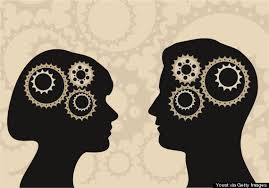
The science of love
When do you know if you fancy someone? What does love do to your brain chemicals, and is falling in love just nature’s way to keep our species alive?
We call it love. It feels like love. But the most exhilarating of all human emotions is probably nature’s beautiful way of keeping the human species alive and reproducing.
With an irresistible cocktail of chemicals, our brain entices us to fall in love. We believe we’re choosing a partner. But we may merely be the happy victims of nature’s lovely plan.
It’s not what you say…
Psychologists have shown it takes between 90 seconds and 4 minutes to decide if you fancy someone.
Research has shown this has little to do with what is said, rather
55% is through body language
38% is the tone and speed of their voice
Only 7% is through what they say
The 3 stages of love
Helen Fisher of Rutgers University in the States has proposed 3 stages of love – lust, attraction and attachment. Each stage might be driven by different hormones and chemicals.
Stage 1: Lust
This is the first stage of love and is driven by the sex hormones testosterone and oestrogen – in both men and women.
Stage 2: Attraction
This is the amazing time when you are truly love-struck and can think of little else. Scientists think that three main neurotransmitters are involved in this stage; adrenaline, dopamine and serotonin.
Adrenaline
The initial stages of falling for someone activates your stress response, increasing your blood levels of adrenalin and cortisol. This has the charming effect that when you unexpectedly bump into your new love, you start to sweat, your heart races and your mouth goes dry.
Dopamine
Helen Fisher asked newly ‘love struck’ couples to have their brains examined and discovered they have high levels of the neurotransmitter dopamine. This chemical stimulates ‘desire and reward’ by triggering an intense rush of pleasure. It has the same effect on the brain as taking cocaine!
Fisher suggests “couples often show the signs of surging dopamine: increased energy, less need for sleep or food, focused attention and exquisite delight in smallest details of this novel relationship” .
Serotonin
And finally, serotonin. One of love’s most important chemicals that may explain why when you’re falling in love, your new lover keeps popping into your thoughts.
Does love change the way you think?
A landmark experiment in Pisa, Italy showed that early love (the attraction phase) really changes the way you think.
Dr Donatella Marazziti, a psychiatrist at the University of Pisa advertised for twenty couples who’d been madly in love for less than six months. She wanted to see if the brain mechanisms that cause you to constantly think about your lover, were related to the brain mechanisms of Obsessive-Compulsive Disorder.
By analysing blood samples from the lovers, Dr Marazitti discovered that serotonin levels of new lovers were equivalent to the low serotonin levels of Obsessive-Compulsive Disorder patients.
Love needs to be blind
Newly smitten lovers often idealise their partner, magnifying their virtues and explaining away their flaws says Ellen Berscheid, a leading researcher on the psychology of love.
New couples also exalt the relationship itself. “It’s very common to think they have a relationship that’s closer and more special than anyone else’s”. Psychologists think we need this rose-tinted view. It makes us want to stay together to enter the next stage of love – attachment.
Stage 3: Attachment
Attachment is the bond that keeps couples together long enough for them to have and raise children. Scientists think there might be two major hormones involved in this feeling of attachment; oxytocin and vasopressin.
Oxytocin – The cuddle hormone
Oxytocin is a powerful hormone released by men and women during orgasm.
It probably deepens the feelings of attachment and makes couples feel much closer to one another after they have had sex. The theory goes that the more sex a couple has, the deeper their bond becomes.
Oxytocin also seems to help cement the strong bond between mum and baby and is released during childbirth. It is also responsible for a mum’s breast automatically releasing milk at the mere sight or sound of her young baby.
Diane Witt, assistant professor of psychology from New York has showed that if you block the natural release of oxytocin in sheep and rats, they reject their own young.
Conversely, injecting oxytocin into female rats who’ve never had sex, caused them to fawn over another female’s young, nuzzling the pups and protecting them as if they were their own.
Vasopressin
Vasopressin is another important hormone in the long-term commitment stage and is released after sex.
Vasopressin (also called anti-diuretic hormone) works with your kidneys to control thirst. Its potential role in long-term relationships was discovered when scientists looked at the prairie vole.
Prairie voles indulge in far more sex than is strictly necessary for the purposes of reproduction. They also – like humans – form fairly stable pair-bonds.
When male prairie voles were given a drug that suppresses the effect of vasopressin, the bond with their partner deteriorated immediately as they lost their devotion and failed to protect their partner from new suitors.
And finally … how to fall in love
Find a complete stranger.
Reveal to each other intimate details about your lives for half an hour.
Then, stare deeply into each other’s eyes without talking for four minutes.

“Why is that you fall in love? you fall and break a hip, you fall and you can’t get up, you fall from grace, now I have to fall in love? Sounds like a warning.”

Chocolate is good for finding those cavities
In a new posting, I’m going to try and highlight companies that employ american workers so we can help and support our economy. I just ask that you pass this along and buy one of these products to show support for the great job these companies are doing. I’ll try and keep it to affordable companies and avoid, let’s say, Boeing, unless you can afford buying that airplane, then e-mail me, there’s a blog I would like you to fund. Here’s some facts about the Hershey Company. Remember, buy a kit kat this week and pass the info on to the next guy. I’m not saying don’t buy Corona, but get an extra twizzlers.
More than a century ago, Milton Hershey broke ground in Hershey, Pennsylvania, for what was to become the world’s largest chocolate factory. Today, Hershey’s manufacturing network produces the world’s best chocolate and confectionery products for consumers around the globe. Take a tour of the plants and see where some of the iconic brands are made.
Hershey, PA
Hershey, Pa., is where it all started more than 100 years ago, and it’s still where the famous HERSHEY’S KISSES Chocolates, HERSHEY’S Milk Chocolate bars and HERSHEY’S Milk Chocolate with Almonds bars are made.
West Hershey, PA
Coming Soon!
REESE’S, Hershey, PA
Come inside the REESE’S factory in Hershey, Pa., and check out the world-famous REESE’S Peanut Butter Cups and KIT KAT Wafer Bars.
Lancaster, PA
The facility in Lancaster, Pa., produces 1 million miles of TWIZZLERS Twists each year!
Hazleton, PA
The Hazleton, Pa., facility produces many consumer favorites, including KIT KAT, HERSHEY’S EXTRA DARK and CADBURY bars.
Stuarts Draft, VA
The Virginia facility makes REESE’S WHIPPS, TAKE 5, REESE’S PIECES and all-time favorites MOUNDS and ALMOND JOY candies.
Robinson, IL
The Illinois plant produces many of the popular brands loved by consumers, including PAYDAY, HEATH, WHOPPERS and MILK DUDS candies.
Guadalajara, Mexico
Hershey has been producing high-quality chocolate, confectionery and beverages in Mexico for more than 40 years.

The United States Congress defines a hate crime as a “criminal offense against a person or property motivated in whole or in part by an offender’s bias against a race, religion, disability, ethnic origin or sexual orientation.” The following facts and figures are from the Federal Bureau of Investigation’s 2012 annual hate crime statistics report.
There are 939 active hate groups in the United States – a 56 percent increase since 2000. The number of such groups surged in response to the election of the first African-American president, Barack Obama, and the economic downturn.
In 2012, there were a total of 5,796 hate crime incidents nationwide, with 7,164 victims.
Most hate crimes are motivated by racial bias, accounting for 48 percent of all such reports.
Hate crimes against Black people far outnumber hate crimes against the larger white population.
The share of racial-ethnic incidents is as follows: anti-Black, 52 percent; anti-white, 19 percent; anti-Hispanic, 11 percent; anti-other ethnicity, 8 percent; anti-multiple races, 3 percent; anti-Asian, 3 percent; anti-American Indian, 3 percent.
The number of hate crimes motivated by religious bias nearly tripled from 10 percent in 2004 to 28 percent in 2012, while the percentage of hate crimes motivated by gender bias more than doubled from 12 percent to 26 percent during the same period.
The most prevalent hate groups in 2012 were the Ku Klux Klan, neo-Nazis, white nationalists and racist skinheads.
Of the 5,331 known hate crime offenders, 54.6 percent are white and 23.3 percent are Black.
Half of all the hate crimes in America are committed by people between the ages of 15 and 24.
There were 109 violent acts against the homeless reported in the 2013, half of the attacks were committed by people younger than 20 years old. Seventy-two percent of the attacks were committed by people younger than 30.
Currently, homeless people are not accounted for in federal hate crime statistics, but have some protection under laws in seven states – Alaska, California, Florida, Maine, Maryland, Rhode Island and Washington –along with Puerto Rico, District of Columbia, Cleveland, Los Angeles and Seattle.


“A baby is the smartest person in the world”
-A baby craps on himself and a beautiful woman makes funny noises and funny faces as she wipes his behind
-You crap on yourself and you are just an idiot that crapped on himself
– A baby pees on himself and he gets a smile from a beautiful woman with a knowing wink
-You pee on yourself and you have to sleep in the tub and get yelled at by a beautiful woman for drinking all the whiskey
-A baby sleeps all day and a beautiful woman says how adorable
-You sleep all day and a beautiful woman tosses cold water on you and calls you a bum
-A baby starts crying and he gets a boob in the mouth
-You start crying and your best friend gets her boob in his mouth
Travel Photography
 mannysblog.com