FACT OF THE DAY!

superbowl 50

10 Fun Facts About The Super Bowl
Are you ready for Super Bowl Sunday?

Written By Desire Thompson

As we approach Super Bowl 50, the hype is at an all-time high.

After all, the showdown between the Denver Broncos and the Carolina Panthers marks the 50-year celebration of the game. Prior to its Super Bowl name, the AFL-NFL World Championship Game of 1967 led to a victory for the Green Bay Packers and a merger of the two leagues.

From there, magic was made in the form of legendary match-ups, delicious treats, show-stopping half-time performances, and of course, legendary (cameo-filled) commercials.

There’s plenty of facts to share with friends who know little-to-nothing about the game. While you’re munching your favorite Super Bowl snack, here are some fun facts about Sunday’s game and the history of the sport.

1. The Use of Roman Numerals

Super Bowl III – New York Jets vs Baltimore Colts – January 12, 1969
The game between the New York Jets and the Baltimore Colts in 1969 was the first time the league used Roman numerals and the official “Super Bowl” name. The Jets went on to beat the Colts 16-7 and Joe Namath continued on a path that would eventually lead him to the Hall of Fame.

2. The Old v. New Staple Holds Up

Washington Redskins v Carolina Panthers
Not everyone is a fan of the old v. new player match-up, but this year’s is quite hard to miss. The age difference between quarterbacks Peyton Manning and Cam Newton is 13 years. The gap is the largest in Super Bowl history, making Manning the oldest starting QB in the game’s history. Expect a little friendly rivalry between these two. In a recent interview, Manning revealed he isn’t big on dancing like Newton, but he respects the passion the 26-year-old has for the game. Who knows; if he scores a running TD, maybe we’ll get to watch Manning break out the dab.

3. Viewership Is Larger Than You Think

friends watching football on TV
Super Bowl games don’t include overtime and they never end in ties, but it doesn’t stop fans from tuning in. Nielsen reported over the last ten years (2004-2014) viewership has increased by 22.4 million. The most viewed games are from the last five years, surpassing the most watched program from February 1983 with 106 million viewers–the M*A*S*H finale. Super Bowl XLVIII brought in over 25.3 million tweets generated – between the game, Beyonce’s half-time show, and the ads. While many think football is a man’s game, women’s viewership has increased to an average of 50 million viewers, with females accounting for 46.8 percent of viewership.

4. Snacks on Snacks on Snacks

Dishes of food at party
Everyone enjoys a good Super Bowl party, especially when there’s food involved. The event is the second-highest day of food consumption after Thanksgiving. Brands like Lays and pizza chains such as Domino’s, Papa Johns, and more sell millions of food for the big day. Guacamole has also become a fan favorite over the years. Approximately 100 million pounds of guacamole will be devoured by fans. Beer consumption has declined over the years, but it’s still one of the most popular beverages during the game.

5. History Making Coaches

Tony Dungy
While most fans are fixated on the players, the coaches are also widely celebrated and adored. For Super Bowl XV, The Raiders’ Tom Flores, of Hispanic descent, became the first minority coach to win the game. In 2007, Tony Dungy became the first Black coach to win the Super Bowl. The Indianapolis Colts coach competed against his friend and protegé Lovie Smith, making them the first two Black coaches to lead the game.

In another ironic twist, Panthers’ Ron Rivera and Denver’s Gary Kubiak are the first coaches to appear in the Super Bowl who were ex-NFL players since Mike Ditka and Raymond Berry 30 years ago.

6. Halftime Games Flourish

Super Bowl 10 in Miami welcomed Up With The People, an organization who brought education and positive energy to the youth. The group was the first musical act to perform at the Super Bowl. One of the most legendary acts would come years later during Super Bowl XXVI, starring the late Michael Jackson. His show would set the precedent for flair and pop culture status, as acts like U2, Beyonce, Janet Jackson, and Prince hold up the tradition.

7. Super Bowl Ads Are Just As Enjoyable As The Game

Back in the ’60s, Super Bowl commercials would cost as low as $37,500. This year, advertisers shell out up to $5 million for a 30-second spot. The cost is 11 percent higher than last year’s commercials. Ads have generated a total of $2.19 billion in sales. Aside from its steady cash flow, ads have been implemented into pop culture for their controversy and celebrity cameos. From the infamous Budweiser and Coca-Cola commercials, to banned Ashley Madison ads that live on the web, each moment evokes tears of laughter or eye rolls at the small screen.

8. Game Stats

Tennessee Titans vs Oakland Raiders
Each game has generated new records for the sport. Jerry Rice has set the record for eight touchdowns, while the New York Giants and New England Patriots pulled off the longest drive ever (10 minutes) during Super Bowl XLII. Tom Brady holds the record for the most touchdown passes with 13, while Colin Kaepernick holds the longest touchdown run by a QB (15 yards) during Super Bowl XLVII against the Baltimore Ravens.

9. Cam Newton’s Year

Carolina Panthers v Atlanta Falcons
We previously mentioned the age gap between Cam Newton and Peyton Manning, but the player’s sharp personality and skills make him one of the players to watch. The Georgia native is just one win away from being the first-ever quarterback to win the Heisman, National Championship, NFL MVP, and the Super Bowl. His match-up with Manning is also the first time the game will feature two quarterbacks who were drafted No. 1 overall. The Carolina Panthers have managed to beat the odds with Newton leading the team, but it wasn’t always this way.

At the start of the season, the Panthers were the worst team ever to start 11-0. Since the midseason, Newton became one of the league’s most accurate passers and deemed the second-most valuable QB. Only time will tell if he can come full circle.

10. Whitney’s National Anthem

The late Whitney Houston’s rendition of the “Star-Spangled Banner” has been forever remembered as the most beloved version ever. The Super Bowl XXV performance in 1991 came just days into the Persian Gulf War, helping the nation adopt a patriotic mood. The single went on to top the charts, a feat no other musical act has accomplished with the National Anthem. Houston and her record label donated all proceeds to charity at the time. When it was re-released during the September 11 attacks, the singer once again donated the proceeds to the victims’ families.

This year, Lady Gaga is set to sing the National Anthem.

FACT OF THE DAY!

FactCheck.org

Our Mission

We are a nonpartisan, nonprofit “consumer advocate” for voters that aims to reduce the level of deception and confusion in U.S. politics. We monitor the factual accuracy of what is said by major U.S. political players in the form of TV ads, debates, speeches, interviews and news releases. Our goal is to apply the best practices of both journalism and scholarship, and to increase public knowledge and understanding.

FactCheck.org is a project of the Annenberg Public Policy Center of the University of Pennsylvania. The APPC was established by publisher and philanthropist Walter Annenberg to create a community of scholars within the University of Pennsylvania that would address public policy issues at the local, state and federal levels.

FACT OF THE DAY!

excited utterance

Excited Utterance

Under the Federal Rules of Evidence, an excited utterance is defined as a statement that concerns a startling event, made by the declarant when the declarant is still under stress from the startling event. An excited utterance is admissible under an exception to the hearsay rule.

FACT OF THE DAY!

DNA

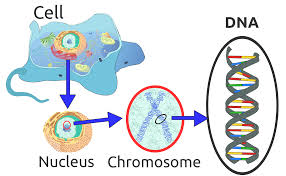
DNA or deoxyribonucleic acid codes for your genetic make-up. There are lots of facts about DNA, but here are 10 that are particularly interesting, important, or fun.
Even though it codes for all the information that makes up an organism, DNA is built using only four building blocks, the nucleotides adenine, guanine, thymine, and cytosine.

Every human being shares 99% of their DNA with every other human.

If you put all the DNA molecules in your body end to end, the DNA would reach from the Earth to the Sun and back over 600 times (100 trillion times six feet divided by 92 million miles).

A parent and child share 99.5% of the same DNA.

You have 98% of your DNA in common with a chimpanzee.

If you could type 60 words per minute, eight hours a day, it would take approximately 50 years to type the human genome.

DNA is a fragile molecule. About a thousand times a day, something happens to it to cause errors. This could include errors during transcription, damage from ultraviolet light, or any of a host of other activities. There are many repair mechanisms, but some damage isn’t repaired. This means you carry mutations! Some of the mutations cause no harm, a few are helpful, while others can cause diseases, such as cancer.

Scientists at Cambridge University believe humans have DNA in common with the mud worm and that it is the closest invertebrate genetic relative to us. In other words, you have more in common, genetically speaking, with a mud worm than you do with a spider or octopus or cockroach.

Humans and cabbage share about 40-50% common DNA.

Friedrich Miescher discovered DNA in 1869, although scientists did not understand DNA was the genetic material in cells until 1943. Prior to that time, it was widely believe that proteins stored genetic information.

FACT OF THE DAY!

electric body


How Your Body Generates Electricity
March 01, 2014 | 152,602 views

Visit the Mercola Video Library
By Dr. Mercola

Your body is capable of generating electricity, and this ability is actually a key part of your achieving health. Electricity allows your nervous system to send signals to your brain. These signals are actually electrical charges that are delivered from cell to cell, allowing for nearly instantaneous communication.

The messages conducted via electrical signals in your body are responsible for controlling the rhythm of your heartbeat, the movement of blood around your body, and much more.

Your biological clock even uses electrical activity in order to help keep your circadian rhythms in order.1 You are, quite simply, an electrical being. If electrical activity stops in your body, you cannot survive. But how, exactly, does this electrical activity take place?

How Does Your Body Produce Electricity?

Inside your body are atoms that are made up of positively charged protons, negatively charged electrons, and neutrons (which are neutral).

An atom with unbalanced charges will become either positively or negatively charged, and the switch from one charge to the other allows electrons to flow from one atom to another. This is what is referred to as electricity.

Your cells generate electrical charges via electrolytes like sodium and potassium using a mechanism known as the “sodium-potassium gate.” As Discovery Health explained:

“When your body needs to send a message from one point to another, it opens the gate. When the membrane gate opens, sodium and potassium ions move freely into and out of the cell.

Negatively charged potassium ions leave the cell, attracted to the positivity outside the membrane, and positively charged sodium ions enter it, moving toward the negative charge. The result is a switch in the concentrations of the two types of ions — and rapid switch in charge.

…this flip between positive and negative generates an electrical impulse. This impulse triggers the gate on the next cell to open, creating another charge, and so on. In this way, an electrical impulse moves from a nerve in your stubbed toe to the part of your brain that senses pain.”

It is because of your body’s electrical activity that defibrillators, which deliver an electric shock to your heart, may work to restore heart rhythm and why receiving the wrong type of shock, like an electric shock or lightning strike, can essentially “fry” your body’s electrical system. The opposite also holds true in that you can actually harness the electrical charge of the Earth to positively influence your health in numerous ways.

Your Body Can Absorb Free Electrons from the Earth

The Earth carries an enormous negative charge. It’s always electron-rich and can serve as a powerful and abundant supply of antioxidant and free-radical-busting electrons.

Your body is finely tuned to “work” with the Earth in the sense that there’s a constant flow of energy between your body and the Earth. When you put your feet on the ground, you absorb large amounts of negative electrons through the soles of your feet.

The effect is sufficient to maintain your body at the same negatively charged electrical potential as the Earth. This simple process is called “grounding” or “earthing,” and its effect is one of the most potent antioxidants we know of.

Grounding has been shown to relieve pain, reduce inflammation, improve sleep, enhance wellbeing, and much, much more. When you wear rubber- or plastic-soled shoes, however, you are effectively shielding yourself from this beneficial influx of electrons from the Earth.

Why It’s So Important to Stay Grounded

Grounding’s potent antioxidant effect helps alleviate inflammation throughout your body, a potentially life-saving benefit since inflammation is at the root of most diseases, including heart disease.

According to Dr. Stephen Sinatra, a prominent cardiologist, inflammation thrives when your blood is thick and you have a lot of free radical stress, and a lot of positive charges in your body. Grounding effectively alleviates inflammation because it thins your blood and infuses you with negatively charged ions through the soles of your feet.

Grounding helps thin your blood by improving its zeta potential, which means it improves the energy between your red blood cells. Research has demonstrated it takes about 80 minutes for the free electrons from the earth to reach your bloodstream and transform your blood.

Hypercoagulable (thick, slow-moving) blood contributes to chronic inflammation, because when your blood does not flow well, oxygen can’t get to your tissues. Grounding’s effect on blood thinning is so profound that if you are taking blood thinners, you must work with your health care provider to lower your dose otherwise you may overdose on the medication. You can see my interview with Dr. Sinatra below.

Grounding Helps Neutralize Free Radicals

Interestingly, grounding research has now discovered that if you place your feet on the ground after an injury (or on a grounded sheet, or place grounding patches on the balls of your feet), electrons will migrate into your body and spread through your tissues. Any free radicals that leak into the healthy tissue will immediately be electrically neutralized. This occurs because the electrons are negative, while the free radicals are positive, so they cancel each other out. As noted by Dr. James Oschman, an expert in the field of energy medicine:

“So really what is happening with grounding or earthing is that you’re protecting your body from — I call it, collateral damage… Damage that was not intended to take place but does take place because we have disconnected ourselves from the Earth by putting rubber and plastic on the bottoms of our shoes.”

Free radical stress from exposure to pollution, cigarettes, insecticides, pesticides, trans fats, and radiation, just to name a few, continually deplete your body of electrons. Simply by getting outside, barefoot, touching the Earth, and allowing the excess charge in your body to discharge into the Earth, you can alleviate some of the stress continually put on your system. Walking barefoot can help ameliorate the constant assault of electromagnetic fields and other types of radiation from cell phones, computers, and Wi-Fi. It’s also thought that grounding may actually facilitate the formation of structured water in your body.

Furthermore, grounding also calms your sympathetic nervous system, which supports your heart rate variability. And, when you support heart rate variability, this promotes homeostasis, or balance, in your autonomic nervous system. This is important because anytime you improve your heart rate variability, you’re improving your entire body and all its functions. If you want to learn more, check out the Grounded documentary (in which I actually appear). You’ll hear first-hand accounts from residents of Haines, Alaska who have overcome chronic pain, sleep apnea, and much more simply by getting grounded.


Many Americans spend most of their waking hours wearing shoes with rubber or plastic soles. These materials are very effective insulators, which is precisely why they’re used to insulate electrical wires. Yet, they also effectively disconnect you from the Earth’s natural electron flow. Wearing leather-soled shoes will allow you to stay grounded with the Earth, as will walking barefoot, but you’ll need to do so on the proper surface. Good grounding surfaces include:

Sand (beach)
Grass (preferably moist)
Bare soil
Concrete and brick (as long as it’s not painted or sealed)
Ceramic tile
The following surfaces will NOT ground you:

Asphalt
Wood
Rubber and plastic
Vinyl
Tar or tarmac
Like eating right, exercising, and sleeping, grounding can be described as yet another lifestyle habit that supports optimal health by supporting your body’s “electrical” connection with the Earth. It’s supported and backed by prominent medical doctors, scientists including Dr. David Suzuki, NASA astronauts, and was used by ancient civilizations who placed strong value on their relationship to the Earth.

As mentioned, simply taking off your shoes as much as you can when you’re outdoors will help you take advantage of natural grounding opportunities. When indoors, using a grounding pad or sheet is an excellent way to stay grounded while you’re working or sleeping. (For frequent travelers, I typically bring a grounding pad with me when I fly, too.)