FACT OF THE DAY!

rolling dice

What are the laws of probability?
In probability theory, the law (or formula) of total probability is a fundamental rule relating marginal probabilities to conditional probabilities. It expresses the total probability of an outcome which can be realized via several distinct events – hence the name.

FACT OF THE DAY!


Antenna

Your Unhappy Brain on Television
TV: Short-term fun, long-term problem
Posted Oct 06, 2011
TS Eliot on TV

The remarkable thing about television is that it permits several million people to laugh at the same joke and still feel lonely. – T.S. Eliot

Radio and TV waves

These are the longest wavelength, lowest frequency part of the electromagnetic spectrum family.

When radiowaves are absorbed by an aerial the electrons in the aerial vibrate at the same frequency as the radiowaves. This gives rise to an alternating voltage (current) – that is all they expect you to know at this level.

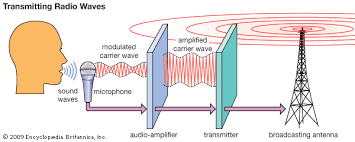
Each system contains a transmitter. This consists of a source of electrical energy, producing alternating current of a desired frequency of oscillation. The transmitter contains a system to modulate (change) some property of the energy produced to ‘print’ a signal on it. This modulation might be as simple as turning the energy on and off, or altering more subtle properties such as amplitude, frequency, phase, or combinations of these properties. The transmitter sends the modulated electrical energy to a tuned resonant antenna; this structure converts the rapidly-changing alternating current into an electromagnetic wave that can move through free space (sometimes with a particular polarisation).
Electromagnetic waves travel through space either directly, or have their path altered by reflection, refraction or diffraction. The intensity of the waves diminishes due to geometric dispersion (the inverse-square law); some energy may also be absorbed by the intervening medium in some cases. Noise will generally alter the desired signal; this electromagnetic interference comes from natural sources, as well as from artificial sources such as other transmitters and accidental radiators. Noise is also produced at every step due to the inherent properties of the devices used. If the magnitude of the noise is large enough, the desired signal will no longer be discernible; this is the fundamental limit to the range of radio communications.
The electromagnetic wave is intercepted by a tuned receiving antenna; this structure captures some of the energy of the wave and returns it to the form of oscillating electrical currents. At the receiver, these currents are demodulated, which is conversion to a usable signal form by a detector sub-system. The receiver is “tuned” to respond preferentially to the desired signals, and reject undesired signals.
Early radio systems relied entirely on the energy collected by an antenna to produce signals for the operator. Radio became more useful after the invention of electronic devices such as the vacuum tube and later the transistor, which made it possible to amplify weak signals. Today radio systems are used for applications from walkie-talkie children’s toys to the control of space vehicles, as well as for broadcasting, and many other applications.

Television’s role in influencing the mental and physical state of our society has been profound. Most people seem to enjoy coming home at night, and turning on the TV. Like any opiate, it’s a way for many to “get away” from the stress of our day. In the short term TV seems to have a relaxing effect. Studies using functional MRI during TV viewing have determined that humorous television programming can activate regions of the brain called the insular cortex and amygdala, which are areas activated and needed for balanced mood .

Unfortunately, more long-term use of TV seems to be where the problem comes in: watching television over 2 hours per day and eating while watching television are each associated with obesity . In our country, 60 percent of people are obese—and this obesity is a leading cause of a lower life expectancy, cardiovascular disease, cancer and diabetes. It has been shown that each extra daily hour of television kids watch is associated with an 8 percent increase in developing depressive symptoms by young adulthood (3).

Although many people report “lack of time” as a major barrier to regular exercise, the average American adult spends over four hours per day watching television (4,5).

Analysis of over 30 years of U.S. national data shows that spending time watching television may contribute to viewers’ happiness in the moment, but the longer-term effects are not good. In these studies, participants reported that on a scale from 0 (dislike) to 10 (greatly enjoy), TV-watching was nearly an 8. Despite these high marks, it seems that the enjoyment from TV was very short lasting, and gave way to discontent. What was found is that unhappy people glue themselves to the television 30 percent more than happy people. Unhappy people report watching 25 hours of television a week while happy people sit for an average of 19 hours (which is still quite an alarming number). These results held even after taking into account education, income, age and marital status. This data from nearly 30,000 adults led the authors of this study to conclude that:

“TV doesn’t really seem to satisfy people over the long haul the way that social involvement or reading a newspaper does. We looked at eight to ten activities that happy people engage in, and for each one, the people who did the activities more—visiting others, going to church, all those things—were more happy. TV was the one activity that showed a negative relationship. Unhappy people did it more, and happy people did it less. The data suggest to us that the TV habit may offer short-run pleasure at the expense of long-term malaise. (6)

In short, happy people do not watch a lot of TV.


FACT OF THE DAY!

radio waves

10 Important Facts About Radio Waves

Radio waves are one of the most important discoveries humans have ever made when it comes to our ability to communicate with one another. It allows us to speak through mobile phones, use Wi-Fi, and even watch television. When you turn on the radio in your vehicle, you’re actually picking up radio waves that are in the air around you.

1. It Tickles the Electromagnetics

Radio waves are often thought of as sound waves because they transmit sounds that can be heard. Over the radio, you can hear your favorite songs and sing along when you’re stuck in traffic. In reality, radio waves are actually electromagnetic waves that are created when a magnetic field is joined with an electric field. These waves can travel very fast. They carry sounds, but actually travel faster than the speed of sound.

2. Some Cool Relatives

There are many different kinds of electromagnet waves that exist today and they’re all relatives of the radio waves. Microwaves, sunlight, remote controls, radar systems, and even Bluetooth technology all work because of electromagnetic waves. The difference in the radio wave is that the receiver of the waves can convert them into electrical signals and then the radio circuit turns that signal into a sound wave. That’s why you can hear someone talking through a radio, even if you’re in the middle of nowhere.

3. It’s the Real Internet

Many call the internet an archive of the human experience and to some extent that is a true observation. Radio waves, however, are believed to be able to travel on forever unless there is something that is able to absorb them. Because they are believed to all travel at the speed of light, there could be radio waves that have communicated our existence to other inhabited worlds nearly 100 light years away. What would an alien race think about hearing an advertisement for Ovaltine?

4. Just Like a Rubber Ball

Radio waves are unique for their ability to “skip” off of items. If something doesn’t absorb the waves and there isn’t a receiver for them, then they will literally bounce off of the object they encounter. This means that radio waves can bounce off of a cloud, the ground, or pretty much anything else as long as the item is an electric conductor. If it isn’t a conductor, that radio waves can go through wood, concrete, and other materials.

5. They Are Long – Super Long

Waves come in different shapes based on their frequencies. When you turn to a different radio station, what you’re doing is turning to a different frequency. Although there are variations in each frequency, all of the radio waves that are surrounding you every day have one thing in common with each other: they are the longest waves of the electromagnetic spectrum. Any frequency that is below 300 GHz is generally considered to be a radio wave. The longest wavelengths can be over 62,000 miles long.

6. A Perfect Telescope

When trying to explore deeper into the universe, scientists are generally limited to the amount of information they can obtain with traditional sight-based methods of exploration. The human eye is blocked by solid objects since no one has evolved the ability to have x-ray or radio vision. That’s why scientists use telescopes that are based on radio frequencies. This allows them to explore beyond what can be seen to understand more about the natural radio sources that can be found.

7. Keeping You Warm in Winter

There have been a lot of concerns over the years about what the long-term exposure to radio waves can do to the human body. Most of the focus tends to be around the microwave frequencies. These frequencies create radiation that is absorbed by the tissues in the body. When radio waves encounter living tissue, it begins to heat it up. This is why large radar transmitters must be avoided when they are active. As for using your cellular phone or microwave, the only place of susceptible damage seems to be the eye. The next time you talk with someone on your phone, don’t press the cell phone up to your eyeball and you should be fine.

8. It’s Totally Cosmic

Using radio waves for scientific study has allowed scientists to discover a numerous amount of incredible things. One of the most outstanding discoveries is that of cosmic background radiation. This is the radiation that has existed since the very formation of the universe itself. Not only does this allow scientists the opportunity to calculate just how old the universe happens to be, it could give humanity a glimpse into what existed before our universe may have existed.

9. Now That’s Some Bass

Lower frequencies are stronger than their higher frequency counterparts and they are less susceptible to bouncing. This means that they are the perfect communication medium for long distance conversations. Add in the fact that very little power is required to generate these low frequency waves and you’ve got the perfect tool to use to speak with submarines and other people who might be underwater. Instead of bouncing off the waves, the frequencies penetrate deeply into the water and other thicker materials that would normally resist radio waves.

10. Thousands of Waves Per Month

When you send a text message from your phone, what you’re really doing is sending a radio wave. That wave is sent to a tower, which is then sent to the phone of a recipient and it all happens almost instantaneously, even if you’re on the other side of the world from the person with who you are communicating. That means the average teenager is generating thousands of unique radio waves every month thanks to their awesome texting skills.

Without radio waves, our lives would be very different. We can even use radio waves to speak with the Voyager craft that have gone beyond the outer boundaries of our solar system. They are an amazing discovery and have undoubtedly changed the course of human history.

FACT OF THE DAY!

Why Do We Root for the Underdog?

CrowdWhy do people root for the underdog and find underdogs appealing?

Researchers propose that those who are viewed as disadvantaged arouse people’s sense of fairness and justice — important principles to most people.

The researchers also found that people tend to believe that underdogs put forth more effort than top-dogs, but that favorable evaluation disappeared when the underdog status no longer applies, such as when people are expected to lose but have a lot of available resources.

In a series of studies, researchers Joseph A. Vandello, Nadav P. Goldschmied, and David A. R. Richards of the University of South Florida tested the scope of people’s support for those who are expected to lose. The researchers were seeking to understand why people are drawn to the Rocky Balboas and the Davids (versus Goliaths) of the world.

Using both sports and political examples, the researchers asked study participants to react to various scenarios presenting different competitors with an advantage or disadvantage. For instance, in one study using the Israeli and Palestinian conflict, the participants were given the same essay about the history of the area, but with different maps to reference — one showing Palestine as smaller than Israel (and thus, the underdog) and the other showing Israel as smaller.

No matter what scenario the participants were presented with, they consistently favored the underdog to win.

FACT OF THE DAY!

ali

1. “I hated every minute of training, but I said, ‘Don’t quit. Suffer now and live the rest of your life as a champion.’”

2. “The fight is won or lost far away from witnesses—behind the lines, in the gym, and out there on the road, long before I dance under those lights.”

3. “He who is not courageous enough to take risks will accomplish nothing in life.”

4. “It’s lack of faith that makes people afraid of meeting challenges, and I believed in myself.”

5. “I know where I’m going and I know the truth, and I don’t have to be what you want me to be. I’m free to be what I want.”

6. “Service to others is the rent you pay for your room here on earth.”

7. “It isn’t the mountains ahead to climb that wear you out; it’s the pebble in your shoe.”

8. “Float like a butterfly, sting like a bee.”

9. “I am the greatest. I said that even before I knew I was. I figured that if I said it enough, I would convince the world that I really was the greatest.”

10. “If they can make penicillin out of moldy bread, they can sure make something out of you.”

11. “Only a man who knows what it is like to be defeated can reach down to the bottom of his soul and come up with the extra ounce of power it takes to win when the match is even.”

12. “Champions aren’t made in gyms. Champions are made from something they have deep inside them—a desire, a dream, a vision. They have to have last-minute stamina, they have to be a little faster, they have to have the skill and the will. But the will must be stronger than the skill.”

13. “There are no pleasures in a fight, but some of my fights have been a pleasure to win.”
14. “I’ve wrestled with alligators / I’ve tussled with a whale / I done handcuffed lightning / And throw thunder in jail.”

15. “Impossible is just a big word thrown around by small men who find it easier to live in the world they’ve been given than to explore the power they have to change it. Impossible is not a fact. It’s an opinion. Impossible is not a declaration. It’s a dare. Impossible is potential. Impossible is temporary. Impossible is nothing.”

16. “If my mind can conceive it, and my heart can believe it—then I can achieve it.”

17. “Don’t count the days; make the days count.”

18. “It’s not bragging if you can back it up.”

19. “At home I am a nice guy: but I don’t want the world to know. Humble people, I’ve found, don’t get very far.”

-Muhammad Ali

FACT OF THE DAY!

superbowl 50

10 Fun Facts About The Super Bowl
Are you ready for Super Bowl Sunday?

Written By Desire Thompson

As we approach Super Bowl 50, the hype is at an all-time high.

After all, the showdown between the Denver Broncos and the Carolina Panthers marks the 50-year celebration of the game. Prior to its Super Bowl name, the AFL-NFL World Championship Game of 1967 led to a victory for the Green Bay Packers and a merger of the two leagues.

From there, magic was made in the form of legendary match-ups, delicious treats, show-stopping half-time performances, and of course, legendary (cameo-filled) commercials.

There’s plenty of facts to share with friends who know little-to-nothing about the game. While you’re munching your favorite Super Bowl snack, here are some fun facts about Sunday’s game and the history of the sport.

1. The Use of Roman Numerals

Super Bowl III – New York Jets vs Baltimore Colts – January 12, 1969
The game between the New York Jets and the Baltimore Colts in 1969 was the first time the league used Roman numerals and the official “Super Bowl” name. The Jets went on to beat the Colts 16-7 and Joe Namath continued on a path that would eventually lead him to the Hall of Fame.

2. The Old v. New Staple Holds Up

Washington Redskins v Carolina Panthers
Not everyone is a fan of the old v. new player match-up, but this year’s is quite hard to miss. The age difference between quarterbacks Peyton Manning and Cam Newton is 13 years. The gap is the largest in Super Bowl history, making Manning the oldest starting QB in the game’s history. Expect a little friendly rivalry between these two. In a recent interview, Manning revealed he isn’t big on dancing like Newton, but he respects the passion the 26-year-old has for the game. Who knows; if he scores a running TD, maybe we’ll get to watch Manning break out the dab.

3. Viewership Is Larger Than You Think

friends watching football on TV
Super Bowl games don’t include overtime and they never end in ties, but it doesn’t stop fans from tuning in. Nielsen reported over the last ten years (2004-2014) viewership has increased by 22.4 million. The most viewed games are from the last five years, surpassing the most watched program from February 1983 with 106 million viewers–the M*A*S*H finale. Super Bowl XLVIII brought in over 25.3 million tweets generated – between the game, Beyonce’s half-time show, and the ads. While many think football is a man’s game, women’s viewership has increased to an average of 50 million viewers, with females accounting for 46.8 percent of viewership.

4. Snacks on Snacks on Snacks

Dishes of food at party
Everyone enjoys a good Super Bowl party, especially when there’s food involved. The event is the second-highest day of food consumption after Thanksgiving. Brands like Lays and pizza chains such as Domino’s, Papa Johns, and more sell millions of food for the big day. Guacamole has also become a fan favorite over the years. Approximately 100 million pounds of guacamole will be devoured by fans. Beer consumption has declined over the years, but it’s still one of the most popular beverages during the game.

5. History Making Coaches

Tony Dungy
While most fans are fixated on the players, the coaches are also widely celebrated and adored. For Super Bowl XV, The Raiders’ Tom Flores, of Hispanic descent, became the first minority coach to win the game. In 2007, Tony Dungy became the first Black coach to win the Super Bowl. The Indianapolis Colts coach competed against his friend and protegé Lovie Smith, making them the first two Black coaches to lead the game.

In another ironic twist, Panthers’ Ron Rivera and Denver’s Gary Kubiak are the first coaches to appear in the Super Bowl who were ex-NFL players since Mike Ditka and Raymond Berry 30 years ago.

6. Halftime Games Flourish

Super Bowl 10 in Miami welcomed Up With The People, an organization who brought education and positive energy to the youth. The group was the first musical act to perform at the Super Bowl. One of the most legendary acts would come years later during Super Bowl XXVI, starring the late Michael Jackson. His show would set the precedent for flair and pop culture status, as acts like U2, Beyonce, Janet Jackson, and Prince hold up the tradition.

7. Super Bowl Ads Are Just As Enjoyable As The Game

Back in the ’60s, Super Bowl commercials would cost as low as $37,500. This year, advertisers shell out up to $5 million for a 30-second spot. The cost is 11 percent higher than last year’s commercials. Ads have generated a total of $2.19 billion in sales. Aside from its steady cash flow, ads have been implemented into pop culture for their controversy and celebrity cameos. From the infamous Budweiser and Coca-Cola commercials, to banned Ashley Madison ads that live on the web, each moment evokes tears of laughter or eye rolls at the small screen.

8. Game Stats

Tennessee Titans vs Oakland Raiders
Each game has generated new records for the sport. Jerry Rice has set the record for eight touchdowns, while the New York Giants and New England Patriots pulled off the longest drive ever (10 minutes) during Super Bowl XLII. Tom Brady holds the record for the most touchdown passes with 13, while Colin Kaepernick holds the longest touchdown run by a QB (15 yards) during Super Bowl XLVII against the Baltimore Ravens.

9. Cam Newton’s Year

Carolina Panthers v Atlanta Falcons
We previously mentioned the age gap between Cam Newton and Peyton Manning, but the player’s sharp personality and skills make him one of the players to watch. The Georgia native is just one win away from being the first-ever quarterback to win the Heisman, National Championship, NFL MVP, and the Super Bowl. His match-up with Manning is also the first time the game will feature two quarterbacks who were drafted No. 1 overall. The Carolina Panthers have managed to beat the odds with Newton leading the team, but it wasn’t always this way.

At the start of the season, the Panthers were the worst team ever to start 11-0. Since the midseason, Newton became one of the league’s most accurate passers and deemed the second-most valuable QB. Only time will tell if he can come full circle.

10. Whitney’s National Anthem

The late Whitney Houston’s rendition of the “Star-Spangled Banner” has been forever remembered as the most beloved version ever. The Super Bowl XXV performance in 1991 came just days into the Persian Gulf War, helping the nation adopt a patriotic mood. The single went on to top the charts, a feat no other musical act has accomplished with the National Anthem. Houston and her record label donated all proceeds to charity at the time. When it was re-released during the September 11 attacks, the singer once again donated the proceeds to the victims’ families.

This year, Lady Gaga is set to sing the National Anthem.

FACT OF THE DAY!

FactCheck.org

Our Mission

We are a nonpartisan, nonprofit “consumer advocate” for voters that aims to reduce the level of deception and confusion in U.S. politics. We monitor the factual accuracy of what is said by major U.S. political players in the form of TV ads, debates, speeches, interviews and news releases. Our goal is to apply the best practices of both journalism and scholarship, and to increase public knowledge and understanding.

FactCheck.org is a project of the Annenberg Public Policy Center of the University of Pennsylvania. The APPC was established by publisher and philanthropist Walter Annenberg to create a community of scholars within the University of Pennsylvania that would address public policy issues at the local, state and federal levels.

FACT OF THE DAY!

excited utterance

Excited Utterance

Under the Federal Rules of Evidence, an excited utterance is defined as a statement that concerns a startling event, made by the declarant when the declarant is still under stress from the startling event. An excited utterance is admissible under an exception to the hearsay rule.

FACT OF THE DAY!

DNA

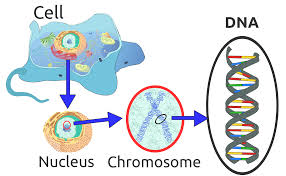
DNA or deoxyribonucleic acid codes for your genetic make-up. There are lots of facts about DNA, but here are 10 that are particularly interesting, important, or fun.
Even though it codes for all the information that makes up an organism, DNA is built using only four building blocks, the nucleotides adenine, guanine, thymine, and cytosine.

Every human being shares 99% of their DNA with every other human.

If you put all the DNA molecules in your body end to end, the DNA would reach from the Earth to the Sun and back over 600 times (100 trillion times six feet divided by 92 million miles).

A parent and child share 99.5% of the same DNA.

You have 98% of your DNA in common with a chimpanzee.

If you could type 60 words per minute, eight hours a day, it would take approximately 50 years to type the human genome.

DNA is a fragile molecule. About a thousand times a day, something happens to it to cause errors. This could include errors during transcription, damage from ultraviolet light, or any of a host of other activities. There are many repair mechanisms, but some damage isn’t repaired. This means you carry mutations! Some of the mutations cause no harm, a few are helpful, while others can cause diseases, such as cancer.

Scientists at Cambridge University believe humans have DNA in common with the mud worm and that it is the closest invertebrate genetic relative to us. In other words, you have more in common, genetically speaking, with a mud worm than you do with a spider or octopus or cockroach.

Humans and cabbage share about 40-50% common DNA.

Friedrich Miescher discovered DNA in 1869, although scientists did not understand DNA was the genetic material in cells until 1943. Prior to that time, it was widely believe that proteins stored genetic information.

FACT OF THE DAY!

electric body


How Your Body Generates Electricity
March 01, 2014 | 152,602 views

Visit the Mercola Video Library
By Dr. Mercola

Your body is capable of generating electricity, and this ability is actually a key part of your achieving health. Electricity allows your nervous system to send signals to your brain. These signals are actually electrical charges that are delivered from cell to cell, allowing for nearly instantaneous communication.

The messages conducted via electrical signals in your body are responsible for controlling the rhythm of your heartbeat, the movement of blood around your body, and much more.

Your biological clock even uses electrical activity in order to help keep your circadian rhythms in order.1 You are, quite simply, an electrical being. If electrical activity stops in your body, you cannot survive. But how, exactly, does this electrical activity take place?

How Does Your Body Produce Electricity?

Inside your body are atoms that are made up of positively charged protons, negatively charged electrons, and neutrons (which are neutral).

An atom with unbalanced charges will become either positively or negatively charged, and the switch from one charge to the other allows electrons to flow from one atom to another. This is what is referred to as electricity.

Your cells generate electrical charges via electrolytes like sodium and potassium using a mechanism known as the “sodium-potassium gate.” As Discovery Health explained:

“When your body needs to send a message from one point to another, it opens the gate. When the membrane gate opens, sodium and potassium ions move freely into and out of the cell.

Negatively charged potassium ions leave the cell, attracted to the positivity outside the membrane, and positively charged sodium ions enter it, moving toward the negative charge. The result is a switch in the concentrations of the two types of ions — and rapid switch in charge.

…this flip between positive and negative generates an electrical impulse. This impulse triggers the gate on the next cell to open, creating another charge, and so on. In this way, an electrical impulse moves from a nerve in your stubbed toe to the part of your brain that senses pain.”

It is because of your body’s electrical activity that defibrillators, which deliver an electric shock to your heart, may work to restore heart rhythm and why receiving the wrong type of shock, like an electric shock or lightning strike, can essentially “fry” your body’s electrical system. The opposite also holds true in that you can actually harness the electrical charge of the Earth to positively influence your health in numerous ways.

Your Body Can Absorb Free Electrons from the Earth

The Earth carries an enormous negative charge. It’s always electron-rich and can serve as a powerful and abundant supply of antioxidant and free-radical-busting electrons.

Your body is finely tuned to “work” with the Earth in the sense that there’s a constant flow of energy between your body and the Earth. When you put your feet on the ground, you absorb large amounts of negative electrons through the soles of your feet.

The effect is sufficient to maintain your body at the same negatively charged electrical potential as the Earth. This simple process is called “grounding” or “earthing,” and its effect is one of the most potent antioxidants we know of.

Grounding has been shown to relieve pain, reduce inflammation, improve sleep, enhance wellbeing, and much, much more. When you wear rubber- or plastic-soled shoes, however, you are effectively shielding yourself from this beneficial influx of electrons from the Earth.

Why It’s So Important to Stay Grounded

Grounding’s potent antioxidant effect helps alleviate inflammation throughout your body, a potentially life-saving benefit since inflammation is at the root of most diseases, including heart disease.

According to Dr. Stephen Sinatra, a prominent cardiologist, inflammation thrives when your blood is thick and you have a lot of free radical stress, and a lot of positive charges in your body. Grounding effectively alleviates inflammation because it thins your blood and infuses you with negatively charged ions through the soles of your feet.

Grounding helps thin your blood by improving its zeta potential, which means it improves the energy between your red blood cells. Research has demonstrated it takes about 80 minutes for the free electrons from the earth to reach your bloodstream and transform your blood.

Hypercoagulable (thick, slow-moving) blood contributes to chronic inflammation, because when your blood does not flow well, oxygen can’t get to your tissues. Grounding’s effect on blood thinning is so profound that if you are taking blood thinners, you must work with your health care provider to lower your dose otherwise you may overdose on the medication. You can see my interview with Dr. Sinatra below.

Grounding Helps Neutralize Free Radicals

Interestingly, grounding research has now discovered that if you place your feet on the ground after an injury (or on a grounded sheet, or place grounding patches on the balls of your feet), electrons will migrate into your body and spread through your tissues. Any free radicals that leak into the healthy tissue will immediately be electrically neutralized. This occurs because the electrons are negative, while the free radicals are positive, so they cancel each other out. As noted by Dr. James Oschman, an expert in the field of energy medicine:

“So really what is happening with grounding or earthing is that you’re protecting your body from — I call it, collateral damage… Damage that was not intended to take place but does take place because we have disconnected ourselves from the Earth by putting rubber and plastic on the bottoms of our shoes.”

Free radical stress from exposure to pollution, cigarettes, insecticides, pesticides, trans fats, and radiation, just to name a few, continually deplete your body of electrons. Simply by getting outside, barefoot, touching the Earth, and allowing the excess charge in your body to discharge into the Earth, you can alleviate some of the stress continually put on your system. Walking barefoot can help ameliorate the constant assault of electromagnetic fields and other types of radiation from cell phones, computers, and Wi-Fi. It’s also thought that grounding may actually facilitate the formation of structured water in your body.

Furthermore, grounding also calms your sympathetic nervous system, which supports your heart rate variability. And, when you support heart rate variability, this promotes homeostasis, or balance, in your autonomic nervous system. This is important because anytime you improve your heart rate variability, you’re improving your entire body and all its functions. If you want to learn more, check out the Grounded documentary (in which I actually appear). You’ll hear first-hand accounts from residents of Haines, Alaska who have overcome chronic pain, sleep apnea, and much more simply by getting grounded.


Many Americans spend most of their waking hours wearing shoes with rubber or plastic soles. These materials are very effective insulators, which is precisely why they’re used to insulate electrical wires. Yet, they also effectively disconnect you from the Earth’s natural electron flow. Wearing leather-soled shoes will allow you to stay grounded with the Earth, as will walking barefoot, but you’ll need to do so on the proper surface. Good grounding surfaces include:

Sand (beach)
Grass (preferably moist)
Bare soil
Concrete and brick (as long as it’s not painted or sealed)
Ceramic tile
The following surfaces will NOT ground you:

Asphalt
Wood
Rubber and plastic
Vinyl
Tar or tarmac
Like eating right, exercising, and sleeping, grounding can be described as yet another lifestyle habit that supports optimal health by supporting your body’s “electrical” connection with the Earth. It’s supported and backed by prominent medical doctors, scientists including Dr. David Suzuki, NASA astronauts, and was used by ancient civilizations who placed strong value on their relationship to the Earth.

As mentioned, simply taking off your shoes as much as you can when you’re outdoors will help you take advantage of natural grounding opportunities. When indoors, using a grounding pad or sheet is an excellent way to stay grounded while you’re working or sleeping. (For frequent travelers, I typically bring a grounding pad with me when I fly, too.)

Trip Idea

Travel Photography