A list of famous influential women, including women’s rights activists, poets, musicians, politicians, humanitarians and scientists.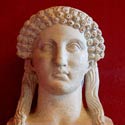 Sappho (circa 570 BCE) One of the first known female writers. Much of her poetry has been lost but her immense reputation has remained. Plato referred to Sappho as one of the great 10 poets.
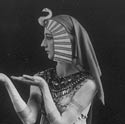 Cleopatra (69 BCE–30 BCE) The last Ptolemaic ruler of Egypt. Cleopatra sought to defend Egypt from the expanding Roman Empire. In doing so she formed relationships with two of Rome’s most powerful leaders, Marc Anthony and Julius Caesar.
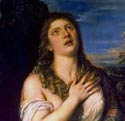 Mary Magdalene (4 BCE–40BCE) Accounts from the Gospels and other sources suggest Mary Magdalene was one of Jesus’ most devoted followers. Mary Magdalene stood near Jesus at his crucifixion and was the first to see his resurrection.
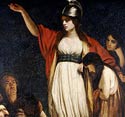 Boudicca (1st Century CE) Boudicca was an inspirational leader of the Britons. She led several tribes in revolt against the Roman occupation. Initially successful, her army of 100,000 sacked Colchester and then London. Her army was later defeated.
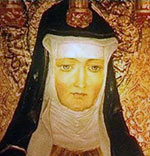 Hildegard of Bingen (1098–1179) Mystic, author and composer. Hildegard of Bingen lived a withdrawn life, spending most of her time behind convent walls. However, her writings, poetry and music were revelatory for the time period. She was consulted by popes, kings and influential people of the time. Her writings and music have influenced people to this day.
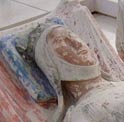 Eleanor of Aquitaine (1122–1204) The first Queen of France. Two of her sons Richard and John went on to become Kings of England. Educated, beautiful and highly articulate, Eleanor influenced the politics of western Europe through her alliances and influence over her sons.
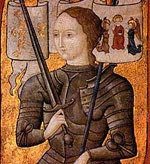 Joan of Arc (1412–1431) The patron saint of France, Joan of Arc inspired a French revolt against the occupation of the English. An unlikely hero, at the age of just 17, the diminutive Joan successfully led the French to victory at Orleans. Her later trial and martyrdom only heightened her mystique.
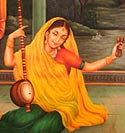 Mirabai (1498–1565) Indian mystic and poet. Mirabai was born into a privileged Hindu family, but she forsook the expectations of a princess and spent her time as a mystic and devotee of Sri Krishna. She helped revitalise the tradition of bhakti (devotional) yoga in India.
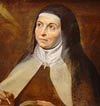 St Teresa of Avila (1515–1582) Spanish mystic, poet and Carmelite reformer. St Teresa of Avila lived through the Spanish inquisition but avoided being placed on trial despite her mystical revelations. She helped to reform the tradition of Catholicism and steer the religion away from fanaticism.
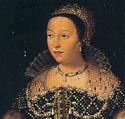 Catherine de Medici (1519–1589) Born in Florence, Italy, Catherine was married to the King of France at the age of 14. She was involved in interminable political machinations seeking to increase the power of her favoured sons. This led to the disastrous St Bartholomew’s Day Massacre.
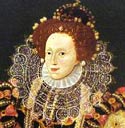 Elizabeth I (1533–1603) Queen of England during a time of great economic and social change, she saw England cemented as a Protestant country. During her reign, she witnessed the defeat of the Spanish Armada leaving Britain to later become one of the world’s dominant superpowers.
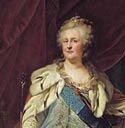 Catherine the Great (1729–1796) One of the greatest political leaders of the Eighteenth Century. Catherine the Great was said to have played an important role in improving the welfare of Russian serfs. She placed great emphasis on the arts and helped to cement Russia as one of the dominant countries in Europe.
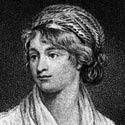 Mary Wollstonecraft (1759–1797) English author, Wollstonecraft wrote the most significant book in the early feminist movement. Her pamphlet “A Vindication of the Rights of Women” laid down a moral and practical basis for extending human and political rights to women. She was a pioneer in the struggle for female suffrage.
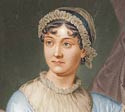 Jane Austen (1775–1817) One of the most famous female authors of all time, Jane Austen wrote several novels, which remain highly popular today. These include Pride and Prejudice, Emma and Northanger Abbey. Jane Austen wrote at a time when female writers were not encouraged, helping pave the way for future writers.
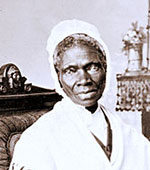 Sojourner Truth (1797 – 1883) African-American abolitionist and women’s rights campaigner. In 1851, gave a famous extemporaneous speech “Ain’t I a woman?” which explained in plain language how women were equal to men.
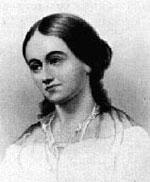 Margaret Fuller (1810–1850) An American women’s rights advocate. Her book Women in the Nineteenth Century (1845) was influential in changing perceptions about men and women, and was one of the most important early feminist works. She argued for equality and women being more self-dependent and less dependent on men.
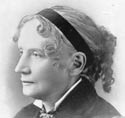 Harriet Beecher Stowe (1811–1896) A lifelong anti-slavery campaigner. Her novel Uncle Tom’s Cabin was a bestseller and helped to popularise the anti-slavery campaign. Abraham Lincoln later remarked that her books were a major factor behind the American civil war.
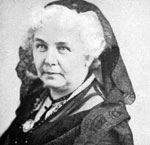 Elizabeth Cady Stanton (1815–1902) American social activist and leading figure in the early women’s rights movement. She was a key figure in helping create the early women’s suffrage movements in the US. She was the principle author of Declaration of Sentiments in 1848.
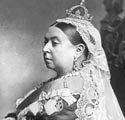 Queen Victoria (1819–1901) British Queen. Presiding over one of the largest empires ever seen, Queen Victoria was the head of state from 1837 – 1901. Queen Victoria sought to gain an influence in British politics whilst remaining aloof from party politics. She came to symbolise a whole era of Victorian values.
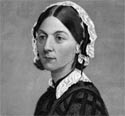 Florence Nightingale (1820–1910) British nurse. By serving in the Crimean war, Florence Nightingale was instrumental in changing the role and perception of the nursing profession. Her dedicated service won widespread admiration and led to a significant improvement in the treatment of wounded soldiers.
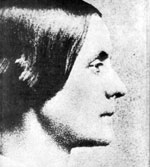 Susan B. Anthony (1820–1906) American Campaigner against slavery and for the promotion of women’s and workers rights. She began campaigning within the temperance movement and this convinced her of the necessity for women to have the vote. She toured the US giving countless speeches on the subjects of human rights.
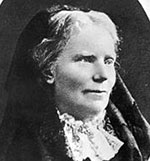 Elizabeth Blackwell ( 1821–1910) Born in Britain, Blackwell was the first woman to receive a medical degree in America and the first woman to be on the UK medical register. Blackwell helped to break down social barriers, enabling women to be accepted as doctors.
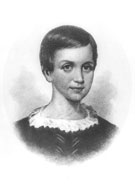 Emily Dickinson (1830–1886) One of America’s greatest poets, Emily Dickinson lived most of her life in seclusion. Her poems were published posthumously and received widespread literary praise for their bold and unconventional style. Her poetic style left a significant legacy on 20th Century poetry.
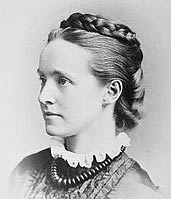 Millicent Fawcett (1846–1929) A leading suffragist and campaigner for equal rights for women. She led Britain’s biggest suffrage organisation, the non-violent (NUWSS) and played a key role in gaining women the vote. She also helped found Newnham College, Cambridge.
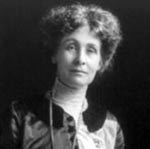 Emmeline Pankhurst (1858–1928) A British suffragette, Emily Pankhurst dedicated her life to the promotion of women’s rights. She explored all avenues of protest including violence, public demonstrations and hunger strikes. She died in 1928, 3 weeks before a law giving all women over 21 the right to vote.
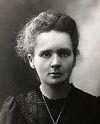 Marie Curie (1867–1934) Polish/French scientist. Curie was the first woman to receive the Nobel Prize and the first person to win the Nobel Prize for two separate categories. Her first award was for research into radioactivity (Physics, 1903). Her second Nobel prize was for Chemistry in 1911. A few years later she also helped develop the first X-ray machines.
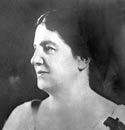 Emily Murphy (1868–1933) The first woman magistrate in the British Empire. In 1927 she joined forces with four other Canadian women who sought to challenge an old Canadian law that said, “women should not be counted as persons.”
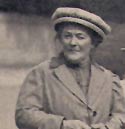
Rosa Luxemburg (1870–1919) Polish/German Marxist revolutionary, Rosa Luxemburg sought to bring social reform to Germany. She wrote fiercely against German imperialism and for international socialism. In 1919, she was murdered after a failed attempt to bring about a Communist revolution in Germany.
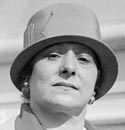
Helena Rubinstein (1870–1965) American businesswoman. Rubinstein formed one of the world’s first cosmetic companies. Her business enterprise proved immensely successful and, later in life, she used her enormous wealth to support charitable enterprises in the field of education, art and health.
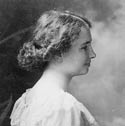 Helen Keller (1880–1968) American social activist. At the age of 19 months, Helen became deaf and blind. Overcoming the frustration of losing both sight and hearing she campaigned tirelessly on behalf of deaf and blind people.
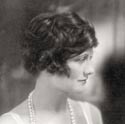 Coco Chanel (1883–1971) French fashion designer. One of the most innovative fashion designers, Coco Chanel was instrumental in defining feminine style and dress during the 20th Century. Her ideas were revolutionary; in particular she often took traditionally male clothes and redesigned them for the benefit of women.
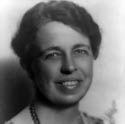 Eleanor Roosevelt (1884–1962) Wife and political aide of American president F.D.Roosevelt. In her own right Eleanor made a significant contribution to the field of human rights, a topic she campaigned upon throughout her life. As head of UN human rights commission she helped to draft the 1948 UN declaration of human rights.
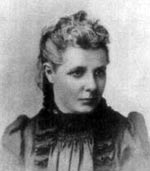 Annie Besant (1847–1933) British campaigner for social justice, an advocate of women’s rights and later member of the Theosophist society. She also actively campaigned for Indian independence.
 Katharine Hepburn (1907–2003) American actress. An iconic figure of twentieth Century film, Katharine Hepburn won four Oscars and received over twelve Oscar nominations. Her lifestyle was unconventional for the time and through her acting and life, she helped redefine traditional views of women’s roles in society.
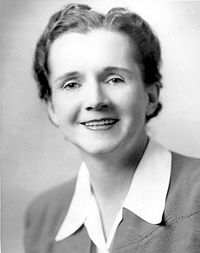 Rachel Carson (1907 – 1964) American conservationist. Rachel Carson was a pioneering environmentalist. Her work, Silent Spring (1962) highlighted the dangers of unregulated pesticide use. It played an important role in creating the modern ecological movement.
 Simone de Beauvoir (1908–1986) French existentialist philosopher. Simone de Beauvoir developed a close personal and intellectual relationship with Jean-Paul Satre. Her book “The Second Sex” depicted the traditions of sexism that dominated society and history. It was a defining book for the feminist movement.
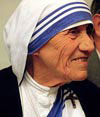 Mother Teresa (1910–1997) Albanian nun and charity worker. Devoting her life to the service of the poor and dispossessed Mother Teresa became a global icon for selfless service to others. Through her Missionary of Charities organisation, she personally cared for thousands of sick and dying people in Calcutta. She was awarded the Nobel Peace prize in 1979.
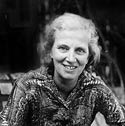 Dorothy Hodgkin (1910–1994) British chemist. Hodgkin was awarded the Nobel prize for her work on critical discoveries of the structure of both penicillin and later insulin. These discoveries led to significant improvements in health care. An outstanding chemist, Dorothy also devoted a large section of her life to the peace movement and promoting nuclear disarmament.
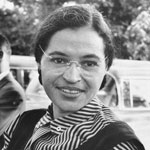 Rosa Parks (1913–2005) American civil rights activist. Rosa Parks’ refusal to give up her bus seat in Montgomery, Alabama, indirectly led to some of the most significant civil rights legislation of American history. She sought to play down her role in the civil rights struggle but for her peaceful and dignified campaigning she became one of the most well respected figures in the civil rights movements.
Queen Elizabeth II 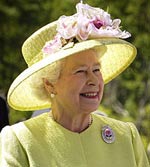 (1926– ) Since ascending to the British throne in 1952, Elizabeth has become the longest serving British monarch. She has witnessed rapid social and economic change and has been a unifying influence for Britain and the Commonwealth.
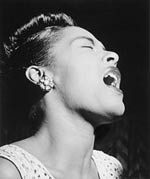 Billie Holiday (1915–1959) American jazz singer. Given the title “First Lady of the Blues” Billie Holiday was widely considered to be the greatest and most expressive jazz singer of all time. Her voice was moving in its emotional intensity and poignancy. Despite dying at the age of only 44, Billie Holiday helped define the jazz era and her recordings are still widely sold today.
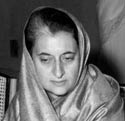 Indira Gandhi (1917–1984) First female prime minister of India. She was in power from between 1966–77 and 1980–84. Accused of authoritarian tendencies she only narrowly avoided a military coup by agreeing to hold an election at the end of the “emergency period” of 1977. She was assassinated in 1984 by her Sikh bodyguards, in response to her storming of the Golden Temple.
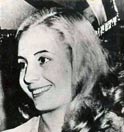 Eva Peron (1919–1952) Eva Peron was widely loved by the ordinary people of Argentina. She campaigned tirelessly for both the poor and for the extension of women’s rights. She died aged only 32 in 1952.
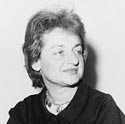 Betty Friedan (1921–2006) American social activist and leading feminist figure of the 1960s. She wrote the best-selling book “The Feminine Mystique.” Friedan campaigned for an extension of female rights and an end to sexual discrimination.
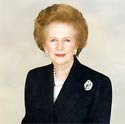 Margaret Thatcher (1925–2013) The first female Prime minister of Great Britain, she governed for over 10 years, putting emphasis on individual responsibility and a belief in free markets.
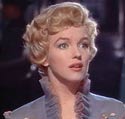 Marilyn Monroe (1926–1962) American actress who became one of the most iconic film legends. Her films were moderately successful, but her lasting fame came through her photogenic good looks and aura of glamour and sophistication.
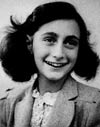 Anne Frank (1929–1945) Dutch Jewish author. Anne Frank’s diary is one of the most widely read books in the world. It reveals the thoughts of a young, yet surprisingly mature 13-year-old girl, confined to a secret hiding place. “Despite everything, I believe that people are really good at heart.”
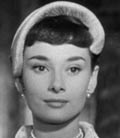 Audrey Hepburn (1929–1993) British actress. Influential female actor of the 1950s and 60s. Audrey Hepburn defined feminine glamour and dignity, and was later voted as one of the most beautiful women of the twentieth century. After her acting career ended in the mid 1960s, she devoted the remaining period of her life to humanitarian work with UNICEF.
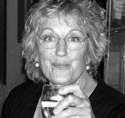 Germaine Greer (1939– ) Australian feminist icon of the 1960s and 1970s, Germaine Greer enjoys raising contentious issues. In particular her book “The Female Eunuch” was a defining manifesto for the feminist movement, which proved influential in the 1960s.
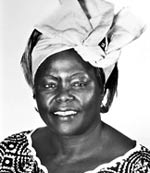 Wangari Maathai (1940–2011 ) Kenyan-born environmentalist, pro-democracy activist and women’s rights campaigner. She was awarded the Nobel Peace Prize for efforts to prevent conflict through protection of scarce resources.
 Betty Williams (1943– ) Together with Mairead Corrigan, Betty Williams campaigned to bring an end to the sectarian violence in Northern Ireland. They founded the Community for Peace and were awarded the Nobel Peace Prize in 1977 (post dated for 1976).
 Billie Jean King (1943– ) American tennis player. Billie Jean King was one of the greatest female tennis champions, who also battled for equal pay for women. She won 67 professional titles including 20 titles at Wimbledon.
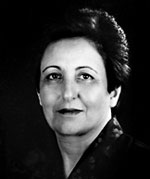 Shirin Ebadi (1947– ) An Iranian lawyer, Ebadi has fought for human rights in Iran, representing political dissidents and founding initiatives to promote democracy and human rights. She was awarded the Nobel Peace Prize in 2003.
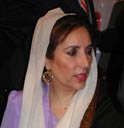 Benazir Bhutto (1953–2007) The first female prime minister of a Muslim country. She helped to move Pakistan from a dictatorship to democracy, becoming Prime Minister in 1988. She sought to implement social reforms, in particular helping women and the poor. She was assassinated in 2007.
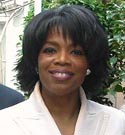 Oprah Winfrey (1954– ) American talk show host and businesswoman. Oprah Winfrey was the first woman to own her own talk show. Her show and book club are very influential, focusing on issues facing American women.
 Madonna (1958 – ) American pop star. Madonna is the most successful female musician of all time. She has sold in excess of 250 million records. She has also starred in films, such as Desperately Seeking Susan and Evita.
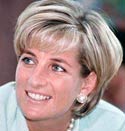 Diana, Princess of Wales (1961–1997) British Royal princess who was noted for her humanitarian charity work. Despite her troubled marriage to Prince Charles, she was popular for her natural sympathy with the poor and disenfranchised.
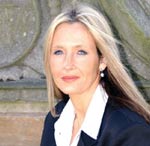 J.K.Rowling (1965– ) British author of the phenomenal best selling Harry Potter series. The volume of sales was so high, it has been credited with leading a revival of reading by children. She wrote the first book as a single mother, struggling to make ends meet, but her writing led to her great success.
Hilary Clinton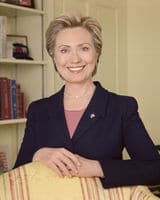 (1947 – ) US politician who became the first women to run for the office of US president for a major political party (Democrats). Also served as Secretary of State from 2009 to 2013.
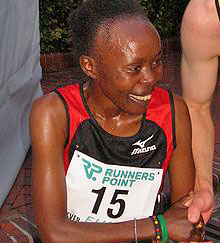 Tegla Loroupe (1973– ) Kenyan athlete. Loroupe held the women’s marathon world record and won many prestigious marathons. Since retiring from running, she has devoted herself to various initiatives promoting peace, education and women’s rights. In her native Kenya, her Peace Race and Peace Foundation have been widely praised for helping to end tribal conflict.
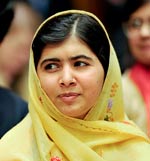 Malala Yousafzai (1997– ) Pakistani schoolgirl who defied threats of the Taliban to campaign for the right to education. She survived being shot in the head by the Taliban and has become a global advocate for women’s rights, especially the right to education.
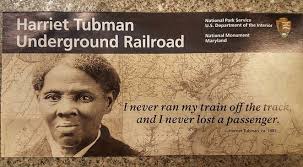
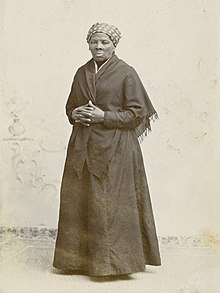
Missing from this list is Harriet Tubman, see below;
| Harriet Tubman |
|
| Born |
Araminta Ross
c. 1822[1]
Dorchester County, Maryland, U.S. |
| Died |
March 10, 1913 (aged 90–91)
Auburn, New York, U.S. |
| Resting place |
Fort Hill Cemetery
Auburn, New York, U.S. |
| Residence |
Auburn, New York, U.S. |
| Other names |
Minty, Moses |
| Occupation |
Civil War Nurse, Suffragist, Civil Rights activist |
| Spouse(s) |
- John Tubman
(m. 1844; div. 1851)
- Nelson Davis
(m. 1869; d. 1888)
|
| Children |
Gertie (adopted) |
| Parent(s) |
- Harriet Greene Ross
- Ben Ross
|
| Relatives |
- Modesty (grandmother)
- Linah (sister)
- Mariah Ritty (sister)
- Soph (sister)
- Robert (brother)
- Ben (brother)
- Rachel (sister)
- Henry (brother)
- Moses (brother)
|
Harriet Tubman (born Araminta Ross, c. 1822[1] – March 10, 1913) was an American abolitionist and political activist. Born into slavery, Tubman escaped and subsequently made some thirteen missions to rescue approximately seventy enslaved people, family and friends,[2] using the network of antislavery activists and safe houses known as the Underground Railroad. She later helped abolitionist John Brown recruit men for his raid on Harpers Ferry. During the Civil War, she served as an armed scout and spy for the United States Army. In her later years, Tubman was an activist in the struggle for women’s suffrage.




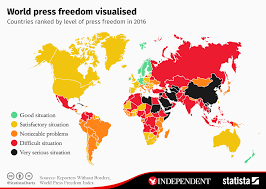
 thought of and written in a time when their human and civil rights had been discarded and just regained. They were written when monarchies made the rule of law and decided what was best for everyone. They, the king or queen, would decide what was best for the people and they would also decide what information the people should know, what religion the people should practice, what they can utter in public and if they were allowed to protest. If anyone decided to disagree with them, they would be jailed, tortured or executed.


 predators, that use fear as a tactic to try and control you and do what they want and do what they say, these people that are sexually aroused by instilling fear in their prey, oddly enough, I couldn’t find a psychological term for it, are more common than we like to admit, that’s why I find it odd that there isn’t a psychological term for it. Harvey Weinstein comes to mind. His actions have severely complicated many lives and there many out there like him. So how do we know? With all that’s going on, how do we know when consent is given?
 mannysblog.com