FACT OF THE DAY!

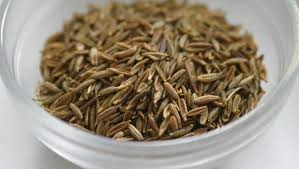
cumin

Health Benefits of Cumin

Seed and Nut

The health benefits of cumin include its ability to aid in digestion, improve immunity and treat piles, insomnia, respiratory disorders, asthma, bronchitis, common cold, lactation, anemia, skin disorders, boils and cancer. Many of you might remember having hated those curries and soups which had roasted or fried cumin seeds in them when you were kids, because they looked like small black insects. However, you probably liked the taste. So your mother might have removed these flavorful parts before she served you the food. That was cumin!Cumin, scientifically known as Cuminum Cyminum, belongs to family Apiaceae and is extensively used in culinary practices of the Indian Subcontinent and some other Asian, African and Latin American countries as a condiment or spice. Those who are of the opinion that spices are bad for one’s health should note that cumin can be beneficial for some of the most dangerous diseases, and is generally consider a boost for overall health. Let’s explore just how it benefits your health in the section below.

FACT OF THE DAY!

spine 3

The coccyx is the very bottom portion of the spine. It represents a vestigial tail (hence the common term “tailbone”) and consists of three or more very small bones fused together. The coccyx is made up of between three and five separate or fused vertebrae.

While it was originally thought that the coccyx is always fused together (with no movement between the coccygeal vertebrae), it is now known that the entire coccyx is not one solid bone but often there is some limitedanatomical drawing of the spine movement between the bones permitted by the fibrous joints and ligaments.
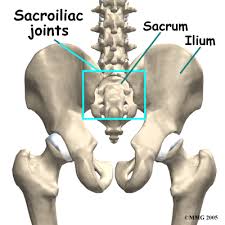
The coccyx articulates with the sacrum through a vestigial disc, and is also connected to the sacrum with ligaments . There is very limited movement between the coccyx and the sacrum.

Why Do More Coccyx Injuries Occur in Women Than Men?

The majority of coccyx injuries occur in women because:

  • The women’s coccyx is rotated, leaving it more exposed to injury
  • Women have a broader pelvis, which means that sitting places pressure on their coccyx (male anatomy causes them to sit without much pressure on the coccyx)
  • Childbirth is a common cause of the condition.

FACT OF THE DAY!

spine 4

Components of the Sacral Region (Sacrum)

  • The first three vertebrae in the sacral region have transverse processes that come together to form wide lateral wings called alae. These alae articulate with the blades of the pelvis (ilium).
  • As part of the pelvic girdle, the sacrum forms the back wall of the pelvis and also forms joints at the hip bone called the sacroiliac joints.
  • The sacrum contains a series of four openings on each side through which the sacral nerves and blood vessels run.
  • The sacral canal runs down the center of the sacrum and represents the end of the vertebral canal.

A healthy sacral region is rarely fractured except in instances of serious sacruminjury, such as a fall or trauma to the area. However, patients with osteoporosis or rheumatoid arthritis are inclined to develop stress fractures and fatigue fractures in the sacrum.

Back pain or leg pain (sciatica) can typically arise due to injury where the lumbar spine and sacral region connect (at L5 – S1) because this section of the spine is subjected to a large amount of stress and twisting during certain activities, such as sports and sitting for long periods of time.

And for those who still don’t get it, you know those sexy dimples in the small of a woman’s back, this bone is responsible for them. They are called the Dimples of Venus, named after the Roman goddess of love and beauty.

FACT OF THE DAY!

Lumbar spine

The lumbar spine receives the nerves that lead to your upper legs and you gluteus maximius and the gluteus minimus (butt) muscles.

Here are some interesting facts about lumbar pressure in various positions:
1.    Sitting hunched over a desk- 200 lbs.
2.    Sitting leaning back on chair with low back rounded- 150 lbs.
3.    Sitting upright with feet elevated-  100 lbs.
4.    Standing with leaning forward posture-  200 lbs.
5.    Standing in proper alignment:-  100 lbs.
6.    Laying flat on back-  55 lbs.
7.    Laying flat on back with knees elevated-  25lbs.

There are easy ways to take pressure off of the lumbar spine and with the differences in compression and pressure, you can see how modifications to standing, sitting and lying down can make a big difference.

FACT OF THE DAY!


spine 2

The thoracic vertebrae, of which there are 12, make up the middle region of the spine. They span the space between the base of the neck and the bottom of the rib cage.

Located in between the cervical spine (neck) and the lumbar spine (lower back), the thoracic vertebrae are labeled T1 to T12. The thoracic vertebrae attach directly to the rib cage.

Larger than vertebrae in the neck, thoracic vertebrae increase in size as they go down the back because they are required to support more and more weight the farther down the body they’re located. The thoracic vertebrae also have extremely prominent spinous processes, which are the large, bony knobs that protrude from the vertebral body. These processes are important for muscles and ligaments to attach to the spine. If you bend over and run your hand directly down the spine, you will be able to feel the spinous processes.

The thoracic vertebrae, and thoracic region, are unique in the following ways:

  • They attach directly to the rib cage
  • This region is less likely to sustain injury because it has the increased protection and stability of the rib cage
  • They play a large role in helping the rib cage to support the body’s organs
  • The thoracic spinal nerves help control the stomach, liver, lungs, and heart

FACT OF THE DAY! 5 Part series

cervicaal spine

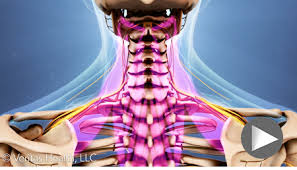
Cervical Nerve Functions

Branching off from the nerves in the spinal cord, the cervical nerves are responsible for relaying messages and ensuring functioning to different body parts

More specifically:

  • C1 and C2 (the first two cervical nerves) control the head.
  • C3 and C4 help control the diaphragm (the sheet of muscle that stretches to the bottom of the rib cage and plays an important role in breathing and respiration).
  • C5 controls upper body muscles like the Deltoids (which form the rounded contours of the shoulders) and the Biceps (which allow flexion of the elbow and rotation of the forearm).
  • C6 controls the wrist extensors (muscles like the extensor carpi radialis longus, extensor carpi radialis brevis, and extensor carpi ulnaris that control wrist extension and hyperextension) and also provides some innervation to the biceps.
  • C7 controls the Triceps (the large muscle on the back of the arm that allows for straightening of the elbow).
  • C8 controls the hands.

Pain or injury in this region can also give you heart pain

FACT OF THE DAY!

amygdala and hippocampus

Which part of the brain controls fear? The amygdala is linked to the parts of the brain that govern your senses, muscles and hormones – enabling your body to react quickly to the sight or sound of a threat. The same information can also travel via the cortex, where it is put together to get the whole picture.

FACT OF THE DAY!

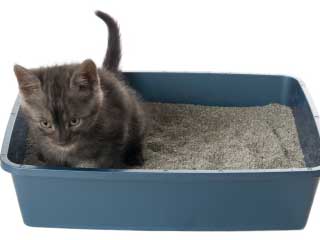
cat litter box

The World’s Most Expensive Coffee is From Beans Cycled Through an Indonesian animal’s Digestive System-Truth!

Summary of eRumor:

Kopi Luwak is a rare and gourmet coffee from Indonesia that is made from beans passed through the digestive system of animals.

The Truth:

Kopi Luwak does exist, is very expensive, and is made from coffee beans passed through the digestive system of an Indonesian animal, but it’s more like a cat than a monkey. According to a feature article by the Manila Coffee House, which sells the stuff, the people who harvest the digested beans don’t really have to pick through cat litter to get it. The animal processes the beans and excretes them whole, unscratched, and without dung.

– Think of that next time you are at Starbucks-

FACT OF THE DAY!

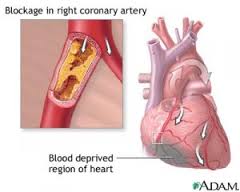
The number one reason for deaths in this country is heart disease and the biggest contributors are smoking excessively, eating unhealthy foods excessively and sitting in the couch excessively or not exercising.

clogged heart

Number of deaths for leading causes of death:

  • Heart disease: 611,105
  • Cancer: 584,881
  • Chronic lower respiratory diseases: 149,205
  • Accidents (unintentional injuries): 130,557
  • Stroke (cerebrovascular diseases): 128,978
  • Alzheimer’s disease: 84,767
  • Diabetes: 75,578
  • Influenza and Pneumonia: 56,979
  • Nephritis, nephrotic syndrome, and nephrosis: 47,112
  • Intentional self-harm (suicide): 41,149

fruits and vegetables

Eating a balanced diet filled with vegetables and fruit will decrease the chances of falling in the top three categories dramatically.