FACT OF THE DAY!

Hypnotized

Mental Health and Hypnosis

Hypnosis — or hypnotherapy — uses guided relaxation, intense concentration, and focused attention to achieve a heightened state of awareness that is sometimes called a trance. The person’s attention is so focused while in this state that anything going on around the person is temporarily blocked out or ignored. In this naturally occurring state, a person may focus his or her attention — with the help of a trained therapist — on specific thoughts or tasks.

How Does Hypnosis Work?

Hypnosis is usually considered an aid to psychotherapy (counseling or therapy), because the hypnotic state allows people to explore painful thoughts, feelings, and memories they might have hidden from their conscious minds. In addition, hypnosis enables people to perceive some things differently, such as blocking an awareness of pain.

Hypnosis can be used in two ways, as suggestion therapy or for patient analysis.

  • Suggestion therapy: The hypnotic state makes the person better able to respond to suggestions. Therefore, hypnotherapy can help some people change certain behaviors, such as stopping smoking ornail biting. It can also help people change perceptions and sensations, and is particularly useful in treating pain.
  • Analysis: This approach uses the relaxed state to explore a possible psychological root cause of a disorder or symptom, such as a traumatic past event that a person has hidden in his or her unconscious memory. Once the trauma is revealed, it can be addressed in psychotherapy.

What Are the Benefits of Hypnosis?

The hypnotic state allows a person to be more open to discussion and suggestion. It can improve the success of other treatments for many conditions, including:

  • Phobias, fears, and anxiety
  • Sleep disorders
  • Depression
  • Stress
  • Post-trauma anxiety
  • Grief and loss

Hypnosis also might be used to help with pain control and to overcome habits, such as smoking or overeating. It also might be helpful for people whose symptoms are severe or who need crisis management.

What Are the Drawbacks of Hypnosis?

Hypnosis might not be appropriate for a person who has psychotic symptoms, such as hallucinations and delusions, or for someone who is using drugs or alcohol. It should be used for pain control only after a doctor has evaluated the person for any physical disorder that might require medical or surgical treatment. Hypnosis also may be a less effective form of therapy than other more traditional treatments, such as medication, for psychiatric disorders.

Some therapists use hypnosis to recover possibly repressed memories they believe are linked to the person’s mental disorder. However, hypnosis also poses a risk of creating false memories — usually as a result of unintended suggestions by the therapist. For this reason, the use of hypnosis for certain mental disorders, such as dissociative disorders, remains controversial.

FACT OF THE DAY!

bible writing

Who Wrote The Bible and Why It Matters

  • Bart D. Ehrman Author, ‘Forged: Writing in the Name of God—Why the Bible’s Authors Are Not Who We Think They Are’

Apart from the most rabid fundamentalists among us, nearly everyone admits that the Bible might contain errors — a faulty creation story here, a historical mistake there, a contradiction or two in some other place. But is it possible that the problem is worse than that — that the Bible actually contains lies?

Most people wouldn’t put it that way, since the Bible is, after all, sacred Scripture for millions on our planet. But good Christian scholars of the Bible, including the top Protestant and Catholic scholars of America, will tell you that the Bible is full of lies, even if they refuse to use the term. And here is the truth: Many of the books of the New Testament were written by people who lied about their identity, claiming to be a famous apostle — Peter, Paul or James — knowing full well they were someone else. In modern parlance, that is a lie, and a book written by someone who lies about his identity is a forgery.

Most modern scholars of the Bible shy away from these terms, and for understandable reasons, some having to do with their clientele. Teaching in Christian seminaries, or to largely Christian undergraduate populations, who wants to denigrate the cherished texts of Scripture by calling them forgeries built on lies? And so scholars use a different term for this phenomenon and call such books “pseudepigrapha.”

You will find this antiseptic term throughout the writings of modern scholars of the Bible. It’s the term used in university classes on the New Testament, and in seminary courses, and in Ph.D. seminars. What the people who use the term do not tell you is that it literally means “writing that is inscribed with a lie.”

And that’s what such writings are. Whoever wrote the New Testament book of 2 Peter claimed to be Peter. But scholars everywhere — except for our friends among the fundamentalists — will tell you that there is no way on God’s green earth that Peter wrote the book. Someone else wrote it claiming to be Peter. Scholars may also tell you that it was an acceptable practice in the ancient world for someone to write a book in the name of someone else. But that is where they are wrong. If you look at what ancient people actually said about the practice, you’ll see that they invariably called it lying and condemned it as a deceitful practice, even in Christian circles. 2 Peter was finally accepted into the New Testament because the church fathers, centuries later, were convinced that Peter wrote it. But he didn’t. Someone else did. And that someone else lied about his identity.

The same is true of many of the letters allegedly written by Paul. Most scholars will tell you that whereas seven of the 13 letters that go under Paul’s name are his, the other six are not. Their authors merely claimed to be Paul. In the ancient world, books like that were labeled as pseudoi — lies.

This may all seem like a bit of antiquarian curiosity, especially for people whose lives don’t depend on the Bible or even people of faith for whom biblical matters are a peripheral interest at best. But in fact, it matters sometimes. Whoever wrote the book of 1 Timothy claimed to be Paul. But he was lying about that — he was someone else living after Paul had died. In his book, the author of 1 Timothy used Paul’s name and authority to address a problem that he saw in the church. Women were speaking out, exercising authority and teaching men. That had to stop. The author told women to be silent and submissive, and reminded his readers about what happened the first time a woman was allowed to exercise authority over a man, in that little incident in the garden of Eden. No, the author argued, if women wanted to be saved, they were to have babies (1 Tim. 2:11-15).

Largely on the basis of this passage, the apostle Paul has been branded, by more liberation minded people of recent generations, as one of history’s great misogynists. The problem, of course, is that Paul never said any such thing. And why does it matter? Because the passage is still used by church leaders today to oppress and silence women. Why are there no women priests in the Catholic Church? Why are women not allowed to preach in conservative evangelical churches? Why are there churches today that do not allow women even to speak? In no small measure it is because Paul allegedly taught that women had to be silent, submissive and pregnant. Except that the person who taught this was not Paul, but someone lying about his identity so that his readers would think he was Paul.

It may be one of the greatest ironies of the Christian scriptures that some of them insist on truth, while telling a lie. For no author is truth more important than for the “Paul” of Ephesians. He refers to the gospel as “the word of truth” (1:13); he indicates that the “truth is in Jesus”; he tells his readers to “speak the truth” to their neighbors (4:24-25); and he instructs his readers to “fasten the belt of truth around your waist” (6:14). And yet he himself lied about who he was. He was not really Paul.

It appears that some of the New Testament writers, such as the authors of 2 Peter, 1 Timothy and Ephesians, felt they were perfectly justified to lie in order to tell the truth. But we today can at least evaluate their claims and realize just how human, and fallible, they were. They were creatures of their time and place. And so too were their teachings, lies and all.

FACT OF THE DAY!

Impaired Driving: Get the Facts

On this Page

  • How big is the problem?
  • Who is most at risk?
  • A Closer Look – Terminology
  • How can deaths and injuries from impaired driving be prevented?
  • Effects of blood alcohol concentration (BAC)
  • What safety steps can individuals take?
  • Social Media Resources for Sharing
  • CDC Vital Signs
  • References

Every day, almost 30 people in the United States die in motor vehicle crashes that involve an alcohol-impaired driver. This amounts to one death every 51 minutes.1  The annual cost of alcohol-related crashes totals more than $59 billion.2

Thankfully, there are effective measures that can help prevent injuries and deaths from alcohol-impaired driving.

How big is the problem?

  • In 2013, 10,076 people were killed in alcohol-impaired driving crashes, accounting for nearly one-third (31%) of all traffic-related deaths in the United States.1
  • Of the 1,149 traffic deaths among children ages 0 to 14 years in 2013, 200 (17%) involved an alcohol-impaired driver.1
  • Of the 200 child passengers ages 14 and younger who died in alcohol-impaired driving crashes in 2013, over half (121) were riding in the vehicle with the alcohol-impaired driver.1
  • In 2012, over 1.3 million drivers were arrested for driving under the influence of alcohol or narcotics.3 That’s one percent of the 121 million self-reported episodes of alcohol-impaired driving among U.S. adults each year.4
  • Drugs other than alcohol (e.g., marijuana and cocaine) are involved in about 18% of motor vehicle driver deaths. These other drugs are often used in combination with alcohol.5


Who is most at risk?

Young people:

  • At all levels of blood alcohol concentration (BAC), the risk of being involved in a crash is greater for young people than for older people.6
  • Among drivers with BAC levels of 0.08 % or higher involved in fatal crashes in 2013, one out of every 3 were between 21 and 24 years of age (33%). The next two largest groups were ages 25 to 34 (29%) and 35 to 44 (24%).1

Motorcyclists:

  • Among motorcyclists killed in fatal crashes in 2013, 27% had BACs of 0.08% or greater.1
  • Nearly half of the alcohol-impaired motorcyclists killed each year are age 40 or older, and motorcyclists ages 40-44 have the highest percentage of deaths with BACs of 0.08% or greater (44%).7

Drivers with prior driving while impaired (DWI) convictions:

  • Drivers with a BAC of 0.08% or higher involved in fatal crashes were six times more likely to have a prior conviction for DWI than were drivers with no alcohol in their system. (6% and 1%, respectively).1


A Closer Look – Terminology

Sobriety checkpoints:

Traffic stops where law enforcement officers assess drivers’ level of alcohol impairment. These checkpoints consistently reduce alcohol-related crashes, typically by 9%.

Ignition interlocks:

Devices that are installed in the vehicles of people who have been convicted of driving while impaired. They prevent operation of the vehicle by anyone with a blood alcohol concentration (BAC) above a specified safe level (usually 0.02% – 0.04%). When installed, interlocks are associated with about a 70% reduction in arrest rates for impaired driving.


How can deaths and injuries from impaired driving be prevented?

Effective measures include:

  • Actively enforcing existing 0.08% BAC laws, minimum legal drinking age laws, and zero tolerance laws for drivers younger than 21 years old in all states.3,8,9
  • Promptly taking away the driver’s licenses of people who drive while intoxicated.10
  • Using sobriety checkpoints.11
  • Putting health promotion efforts into practice that influence economic, organizational, policy, and school/community action.12,13
  • Using community-based approaches to alcohol control and DWI prevention.10,14,15
  • Requiring mandatory substance abuse assessment and treatment, if needed, for DWI offenders.16
  • Raising the unit price of alcohol by increasing taxes.17,18

Areas for continued research:

  • Reducing the illegal BAC threshold  to 0.05%.17,19,20
  • Mandatory blood alcohol testing when traffic crashes result in injury.17


Effects of Blood Alcohol Concentration (BAC)

BAC Levels chartThe more alcohol you consume, the more impaired you become.
Learn how your blood alcohol concentration (BAC) affects your ability to drive.

What safety steps can individuals take?

Whenever your social plans involve alcohol, make plans so that you don’t have to drive after drinking. For example:

  • Prior to any drinking, designate a non-drinking driver when with a group.
  • Don’t let your friends drive impaired. Take their keys away.
  • If you have been drinking, get a ride home or call a taxi.
  • If you’re hosting a party where alcohol will be served, remind your guests to plan ahead and designate their sober driver; offer alcohol-free beverages; and make sure all guests leave with a sober driver.

“QUOTE OF THE DAY”


drunk driving

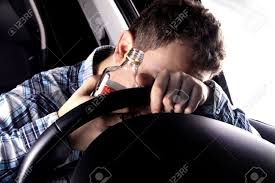
A cop pulled me over and asked “Did you have anything to drink tonight?”, I said  “No ociffer, just this water here on my lap” the officer picked up the bottle and said “That’s wine” I stuck my head out the window and yelled “Jesus, you did it again”.

FACT OF THE DAY!

plastic surgery

What is Plastic Surgery Addiction?

Plastic surgery is all over the media these days, touted by top stars as their means of attaining physical “perfection”. It has become accepted and indeed commonplace in today’s society, especially with the advent on non-invasive procedures such as Botox. In fact, in 2007 the American Society of Aesthic Surgery reported that almost 13.2 billion dollars was spent on plastic surgery, a 17% increase over the previous year. The total number of people undergoing cosmetic procedures has skyrocketed by 457% and growing since the statistics began to be recorded, and nearly 11.7 million surgical and non surgical procedures were performed in the year 2007. Statistics are unavailable for the year 2010, but the media coverage and public awareness keep growing at astronomical rates. Plastic surgery can be extremely addictive; people get hooked on the rush or high of being “beautiful” or being just like popular celebrities, often at their own detriment.

FACT OF THE DAY!

Turn the tables

Meaning

Reverse the positions of adversaries. The phrases is often used when the weaker position subsequently becomes dominant.

Origin

turn the tables

Games like backgammon are known as ‘tables’ games. The phrase ‘turn the tables’ derives from these games and from the practise of reversing the board so that players play from their opponent’s previous position.

The first known example of the figurative use of the phrase in print is in Robert Sanderson’s XII sermons, 1634:

“Whosoever thou art that dost another wrong, do but turn the tables: imagine thy neighbour were now playing thy game, and thou his.”