FACT OF THE DAY!

boob augmentation

Top 5 Breast Implant Facts and The 1st Regret Women Have Afterward
By Tim Boyer G+
2013-02-28 14:21
Breast Implant Facts
Breast implants play an important role in quality of life issues for many women―especially for those in need of reconstruction after breast cancer surgery or trauma, to correct developmental defects, or to correct or improve the results of a previous surgery. For others, it is a strictly cosmetic issue in a society where bigger is better and where youth is associated with looking “perky.” Unfortunately however, regardless of the need for breast augmentation, “having a boob job done” even by a highly regarded and trained plastic surgeon remains fraught with complications aside from the common fear of leakage of a breast implant.
To help women make an informed consumer and medical decision regarding whether or not to have breast implant surgery, the FDA recently issued a ”5 Things to Know About Breast Implants” Consumer Update to act as a guide that forewarns not only what complications can occur, but what a woman needs to do to maintain her breast implants once she gets them.
The following is a summary of the FDA’s 5 must-know implant facts about breast implants before deciding on whether breast implants are the right choice for you, plus the No. 1 regret many women have after they realize that they can never go back.
Breast Implant Fact #1: Breast implants are not lifetime devices.
According to the FDA, the longer a woman carries breast implants, the greater are the chances that she will develop complications, some of which will require additional surgery to treat medical complications such as breast pain and atrophy, capsular contracture, extrusion of the implant through the skin or toxic shock syndrome. Cosmetic reasons for additional surgery include asymmetry, deflation, malposition, and unsatisfactory size and style.
“The life of these devices varies according to the individual,” says Gretchen Burns, a nurse consultant at FDA’s Center for Devices and Radiological Health (CDRH). “All women with implants will face additional surgeries—no one can tell them when.” While a few women have kept their original implants for 20-30 years, “that is not the common experience.”
Breast Implant Fact #2: You must do your breast implant research.
Approved breast implants come with a Summary of Safety and Effectiveness Data (SSED) for each implant that lists their characteristics and the types of fillers used whether it be a silicone gel or the relatively safer saline solution. Included in the SSEDs are information about the indications for use, risks, warnings, precautions, and studies associated with FDA’s approval of the breast implant as well as the frequency of serious complications found in a particular manufacture or implant type.
The FDA advises women considering breast implant surgery to ask their surgeon ahead of time for the latest product review before making a decision.
Breast Implant Fact #3: Communicate with the surgeon.
Surgeons must evaluate the shape, size, surface texture and placement of the implant and the incision site for each woman. As such, any information that you can provide about previous surgeries where excessive scarring may have occurred can help your surgeon decide how best to approach the surgery.
In addition, before committing to having breast implant surgery is the time to let your surgeon know what your desires are in an implant as well as your fears and concerns. Don’t wait until you are flat on your back on a gurney while being wheeled to the operating room.
Breast Implant Fact #4: Learn about long-term risks.

Subscribe to EmaxHealth on YouTube
Although breast implants are approved by the FDA as being considered generally safe, this does mean that they are necessarily risk-free. In some cases involving women with breast implants there have been associations with incidences of connective tissue diseases, lactation difficulties and reproductive problems. Furthermore, the FDA has identified a possible association between breast implants and the development of anaplastic large cell lymphoma (ALCL), a rare type of non-Hodgkin’s lymphoma not to be confused with breast cancer. Women who have breast implants may have a very small but increased risk of developing ALCL in the fluid or scar tissue surrounding the implant.
Breast Implant Fact #5: Implants are high maintenance and monitoring them is crucial.
According to the FDA women with breast implants should:
• promptly report any unusual signs or symptoms to their health care providers, and report any serious side effects to MedWatch, FDA’s safety information and adverse event reporting program.
• have MRI screenings when carrying silicone implants to detect silent ruptures three years after their surgery and every two years after that, which may not be covered by your medical health insurance provider
• continue to perform self-examinations and get mammograms to look for early signs of cancer. “Just because you have implants doesn’t mean you can ignore other breast health recommendations,” states Ms. Burns.
The No. 1 Regret Many Women Have Afterward
According to the FDA, as many as 20 percent (1 in every 5 women) who receive breast implants for augmentation wind up having to have their implants removed within 8 to 10 years due to complications.
The sad result of this is that for many women who choose to not continue to have their implants replaced after removal find much to their regret that there is no going back to the way the breasts used to look. Often times the natural breast is left looking unnatural with cosmetically undesirable dimpling, puckering, or sagging of their natural breasts that will require additional major cosmetic reconstructive surgery.

FACT OF THE DAY!

rolling dice

What are the laws of probability?
In probability theory, the law (or formula) of total probability is a fundamental rule relating marginal probabilities to conditional probabilities. It expresses the total probability of an outcome which can be realized via several distinct events – hence the name.

FACT OF THE DAY!


Antenna

Your Unhappy Brain on Television
TV: Short-term fun, long-term problem
Posted Oct 06, 2011
TS Eliot on TV

The remarkable thing about television is that it permits several million people to laugh at the same joke and still feel lonely. – T.S. Eliot

Radio and TV waves

These are the longest wavelength, lowest frequency part of the electromagnetic spectrum family.

When radiowaves are absorbed by an aerial the electrons in the aerial vibrate at the same frequency as the radiowaves. This gives rise to an alternating voltage (current) – that is all they expect you to know at this level.

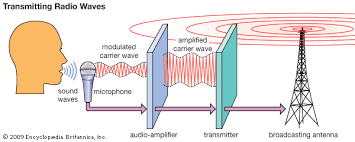
Each system contains a transmitter. This consists of a source of electrical energy, producing alternating current of a desired frequency of oscillation. The transmitter contains a system to modulate (change) some property of the energy produced to ‘print’ a signal on it. This modulation might be as simple as turning the energy on and off, or altering more subtle properties such as amplitude, frequency, phase, or combinations of these properties. The transmitter sends the modulated electrical energy to a tuned resonant antenna; this structure converts the rapidly-changing alternating current into an electromagnetic wave that can move through free space (sometimes with a particular polarisation).
Electromagnetic waves travel through space either directly, or have their path altered by reflection, refraction or diffraction. The intensity of the waves diminishes due to geometric dispersion (the inverse-square law); some energy may also be absorbed by the intervening medium in some cases. Noise will generally alter the desired signal; this electromagnetic interference comes from natural sources, as well as from artificial sources such as other transmitters and accidental radiators. Noise is also produced at every step due to the inherent properties of the devices used. If the magnitude of the noise is large enough, the desired signal will no longer be discernible; this is the fundamental limit to the range of radio communications.
The electromagnetic wave is intercepted by a tuned receiving antenna; this structure captures some of the energy of the wave and returns it to the form of oscillating electrical currents. At the receiver, these currents are demodulated, which is conversion to a usable signal form by a detector sub-system. The receiver is “tuned” to respond preferentially to the desired signals, and reject undesired signals.
Early radio systems relied entirely on the energy collected by an antenna to produce signals for the operator. Radio became more useful after the invention of electronic devices such as the vacuum tube and later the transistor, which made it possible to amplify weak signals. Today radio systems are used for applications from walkie-talkie children’s toys to the control of space vehicles, as well as for broadcasting, and many other applications.

Television’s role in influencing the mental and physical state of our society has been profound. Most people seem to enjoy coming home at night, and turning on the TV. Like any opiate, it’s a way for many to “get away” from the stress of our day. In the short term TV seems to have a relaxing effect. Studies using functional MRI during TV viewing have determined that humorous television programming can activate regions of the brain called the insular cortex and amygdala, which are areas activated and needed for balanced mood .

Unfortunately, more long-term use of TV seems to be where the problem comes in: watching television over 2 hours per day and eating while watching television are each associated with obesity . In our country, 60 percent of people are obese—and this obesity is a leading cause of a lower life expectancy, cardiovascular disease, cancer and diabetes. It has been shown that each extra daily hour of television kids watch is associated with an 8 percent increase in developing depressive symptoms by young adulthood (3).

Although many people report “lack of time” as a major barrier to regular exercise, the average American adult spends over four hours per day watching television (4,5).

Analysis of over 30 years of U.S. national data shows that spending time watching television may contribute to viewers’ happiness in the moment, but the longer-term effects are not good. In these studies, participants reported that on a scale from 0 (dislike) to 10 (greatly enjoy), TV-watching was nearly an 8. Despite these high marks, it seems that the enjoyment from TV was very short lasting, and gave way to discontent. What was found is that unhappy people glue themselves to the television 30 percent more than happy people. Unhappy people report watching 25 hours of television a week while happy people sit for an average of 19 hours (which is still quite an alarming number). These results held even after taking into account education, income, age and marital status. This data from nearly 30,000 adults led the authors of this study to conclude that:

“TV doesn’t really seem to satisfy people over the long haul the way that social involvement or reading a newspaper does. We looked at eight to ten activities that happy people engage in, and for each one, the people who did the activities more—visiting others, going to church, all those things—were more happy. TV was the one activity that showed a negative relationship. Unhappy people did it more, and happy people did it less. The data suggest to us that the TV habit may offer short-run pleasure at the expense of long-term malaise. (6)

In short, happy people do not watch a lot of TV.


FACT OF THE DAY!

radio waves

10 Important Facts About Radio Waves

Radio waves are one of the most important discoveries humans have ever made when it comes to our ability to communicate with one another. It allows us to speak through mobile phones, use Wi-Fi, and even watch television. When you turn on the radio in your vehicle, you’re actually picking up radio waves that are in the air around you.

1. It Tickles the Electromagnetics

Radio waves are often thought of as sound waves because they transmit sounds that can be heard. Over the radio, you can hear your favorite songs and sing along when you’re stuck in traffic. In reality, radio waves are actually electromagnetic waves that are created when a magnetic field is joined with an electric field. These waves can travel very fast. They carry sounds, but actually travel faster than the speed of sound.

2. Some Cool Relatives

There are many different kinds of electromagnet waves that exist today and they’re all relatives of the radio waves. Microwaves, sunlight, remote controls, radar systems, and even Bluetooth technology all work because of electromagnetic waves. The difference in the radio wave is that the receiver of the waves can convert them into electrical signals and then the radio circuit turns that signal into a sound wave. That’s why you can hear someone talking through a radio, even if you’re in the middle of nowhere.

3. It’s the Real Internet

Many call the internet an archive of the human experience and to some extent that is a true observation. Radio waves, however, are believed to be able to travel on forever unless there is something that is able to absorb them. Because they are believed to all travel at the speed of light, there could be radio waves that have communicated our existence to other inhabited worlds nearly 100 light years away. What would an alien race think about hearing an advertisement for Ovaltine?

4. Just Like a Rubber Ball

Radio waves are unique for their ability to “skip” off of items. If something doesn’t absorb the waves and there isn’t a receiver for them, then they will literally bounce off of the object they encounter. This means that radio waves can bounce off of a cloud, the ground, or pretty much anything else as long as the item is an electric conductor. If it isn’t a conductor, that radio waves can go through wood, concrete, and other materials.

5. They Are Long – Super Long

Waves come in different shapes based on their frequencies. When you turn to a different radio station, what you’re doing is turning to a different frequency. Although there are variations in each frequency, all of the radio waves that are surrounding you every day have one thing in common with each other: they are the longest waves of the electromagnetic spectrum. Any frequency that is below 300 GHz is generally considered to be a radio wave. The longest wavelengths can be over 62,000 miles long.

6. A Perfect Telescope

When trying to explore deeper into the universe, scientists are generally limited to the amount of information they can obtain with traditional sight-based methods of exploration. The human eye is blocked by solid objects since no one has evolved the ability to have x-ray or radio vision. That’s why scientists use telescopes that are based on radio frequencies. This allows them to explore beyond what can be seen to understand more about the natural radio sources that can be found.

7. Keeping You Warm in Winter

There have been a lot of concerns over the years about what the long-term exposure to radio waves can do to the human body. Most of the focus tends to be around the microwave frequencies. These frequencies create radiation that is absorbed by the tissues in the body. When radio waves encounter living tissue, it begins to heat it up. This is why large radar transmitters must be avoided when they are active. As for using your cellular phone or microwave, the only place of susceptible damage seems to be the eye. The next time you talk with someone on your phone, don’t press the cell phone up to your eyeball and you should be fine.

8. It’s Totally Cosmic

Using radio waves for scientific study has allowed scientists to discover a numerous amount of incredible things. One of the most outstanding discoveries is that of cosmic background radiation. This is the radiation that has existed since the very formation of the universe itself. Not only does this allow scientists the opportunity to calculate just how old the universe happens to be, it could give humanity a glimpse into what existed before our universe may have existed.

9. Now That’s Some Bass

Lower frequencies are stronger than their higher frequency counterparts and they are less susceptible to bouncing. This means that they are the perfect communication medium for long distance conversations. Add in the fact that very little power is required to generate these low frequency waves and you’ve got the perfect tool to use to speak with submarines and other people who might be underwater. Instead of bouncing off the waves, the frequencies penetrate deeply into the water and other thicker materials that would normally resist radio waves.

10. Thousands of Waves Per Month

When you send a text message from your phone, what you’re really doing is sending a radio wave. That wave is sent to a tower, which is then sent to the phone of a recipient and it all happens almost instantaneously, even if you’re on the other side of the world from the person with who you are communicating. That means the average teenager is generating thousands of unique radio waves every month thanks to their awesome texting skills.

Without radio waves, our lives would be very different. We can even use radio waves to speak with the Voyager craft that have gone beyond the outer boundaries of our solar system. They are an amazing discovery and have undoubtedly changed the course of human history.

FACT OF THE DAY!

Why Do We Root for the Underdog?

CrowdWhy do people root for the underdog and find underdogs appealing?

Researchers propose that those who are viewed as disadvantaged arouse people’s sense of fairness and justice — important principles to most people.

The researchers also found that people tend to believe that underdogs put forth more effort than top-dogs, but that favorable evaluation disappeared when the underdog status no longer applies, such as when people are expected to lose but have a lot of available resources.

In a series of studies, researchers Joseph A. Vandello, Nadav P. Goldschmied, and David A. R. Richards of the University of South Florida tested the scope of people’s support for those who are expected to lose. The researchers were seeking to understand why people are drawn to the Rocky Balboas and the Davids (versus Goliaths) of the world.

Using both sports and political examples, the researchers asked study participants to react to various scenarios presenting different competitors with an advantage or disadvantage. For instance, in one study using the Israeli and Palestinian conflict, the participants were given the same essay about the history of the area, but with different maps to reference — one showing Palestine as smaller than Israel (and thus, the underdog) and the other showing Israel as smaller.

No matter what scenario the participants were presented with, they consistently favored the underdog to win.

Trip Idea

Travel Photography